
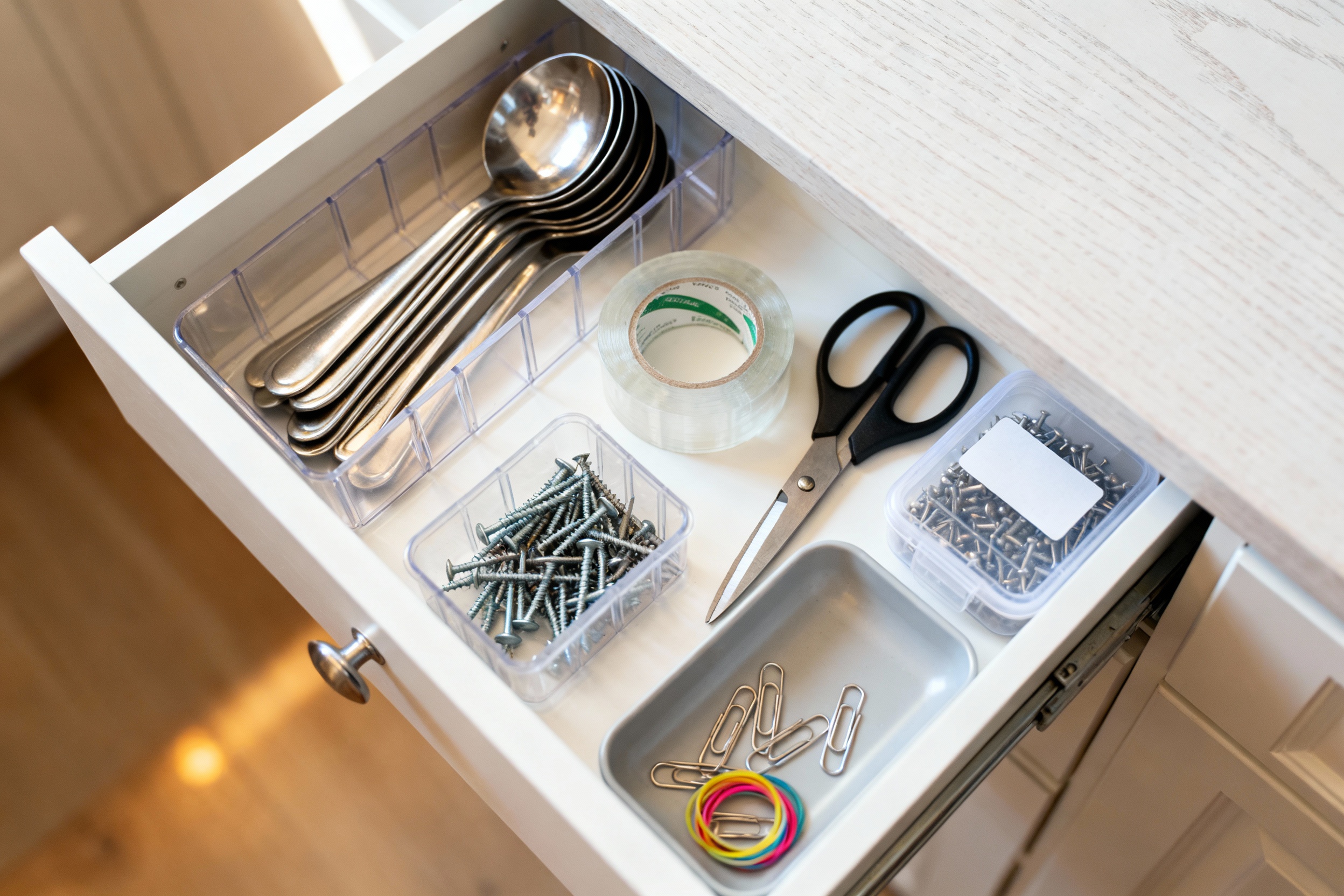
Your kitchen junk drawer isn’t evil. It’s just misunderstood. It holds the chaos you don’t want on your counters and the mystery you don’t want in your life.
Today, we’re turning that black hole into a sleek little command center you can actually use without swearing. Ready to find your sanity between the rubber bands and the rogue tape measure?
First, admit what the junk drawer really is
You don’t need to store the history of civilization in one drawer. You need a home for small, random household essentials you reach for constantly.
Think: scissors, batteries, pens, sticky notes, tape, a few tools, and chargers you actually use. If you don’t use it weekly or monthly, it probably doesn’t belong here. So, what’s the plan? We’ll gut it, group it, contain it, label it, and make it impossible to wreck in a week. Simple.
And yes, you can do this in under an hour.
Empty it like you mean it
Dump everything onto the counter or a tray. Give the drawer a quick wipe. This is the only part that feels mildly annoying, but it’s also where your brain resets.
- Immediate trash: dried-out pens, mystery keys, bread tags, expired coupons, lonely screws.
- Obvious keepers: tools you use, tape, scissors, batteries, chargers, pens that work.
- Relocate items: takeout menus to a binder, warranty cards to a file, spare parts to a labeled bin elsewhere.
The “Do I Really Need This?” test
Ask yourself: When did I use this last?
If your answer sounds like “uhhh,” it’s a no. Keep one of each type if multiples lurk. No one needs five nail clippers in one drawer.
Create smart categories (not chaos)
Categories save you from rummaging. You want broad buckets that match how your brain works, not hyper-specific folders you can’t maintain.
IMO, 5–7 categories hit the sweet spot.
- Writing + paper: pens, pencils, Sharpie, sticky notes.
- Tape + adhesives: Scotch tape, masking tape, glue stick.
- Tools + fix-it: mini screwdriver, measuring tape, hex keys, utility knife.
- Power + batteries: AA/AAA batteries, charging cables, a small power brick.
- Household extras: rubber bands, twist ties, safety pins, a few command hooks.
- Keys + spares: spare house key, garage remote, random fob you actually use.
Set boundaries for weird stuff
You’ll always have a “misc” moment. Fine. Give yourself one small container for true odds-and-ends and keep it tight. When it overflows, you purge.
No negotiations.
Choose containers that behave
Trays and dividers keep your categories intact when life gets messy. You don’t need a fancy system—just segments that fit snugly and don’t slide.
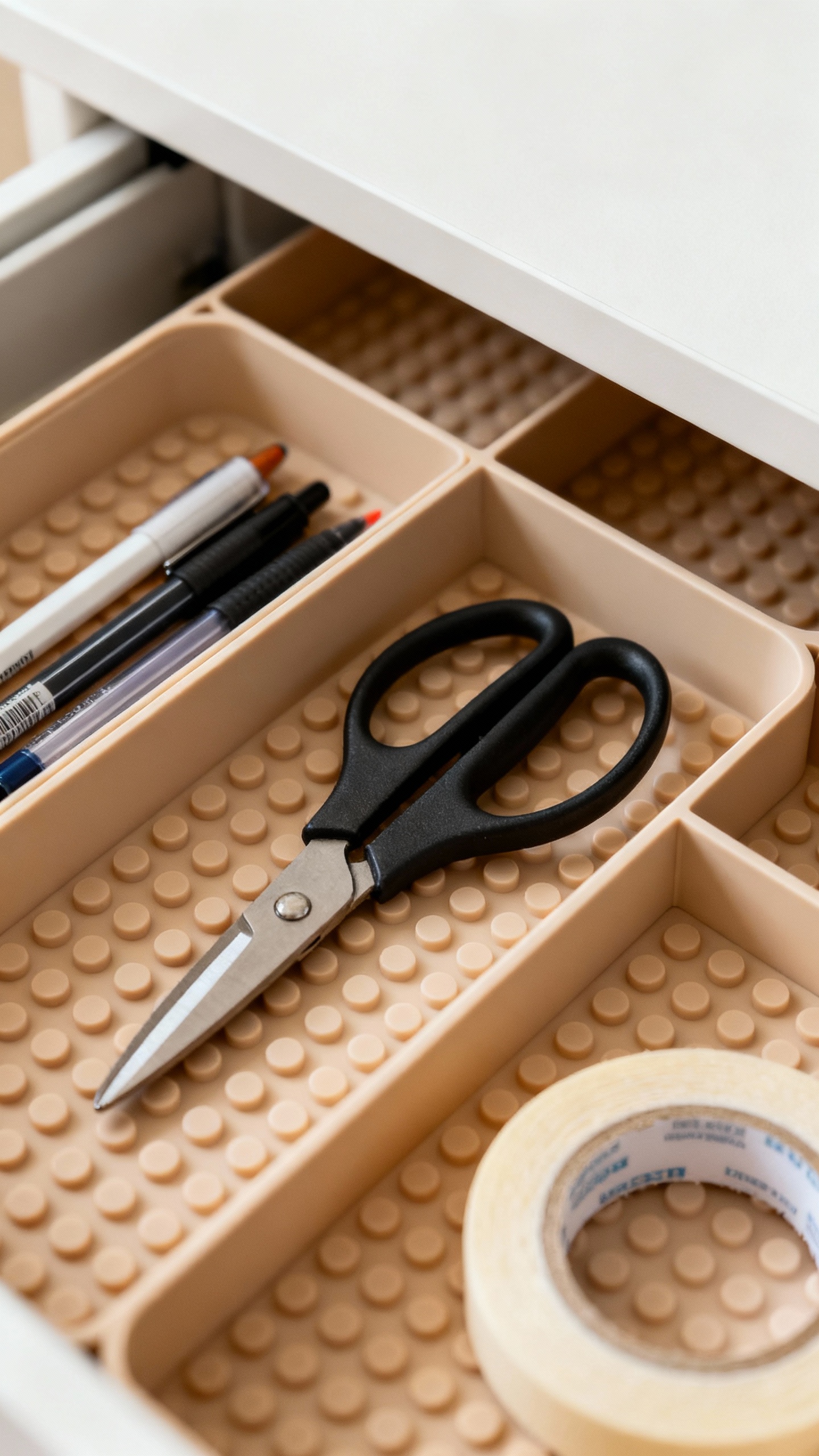
- Modular trays: Mix sizes for different items. Think 3×9 for pens, 3×3 for clips, 6×9 for tools.
- Non-slip liners: A rubber drawer liner stops the shuffle.Cheap and effective.
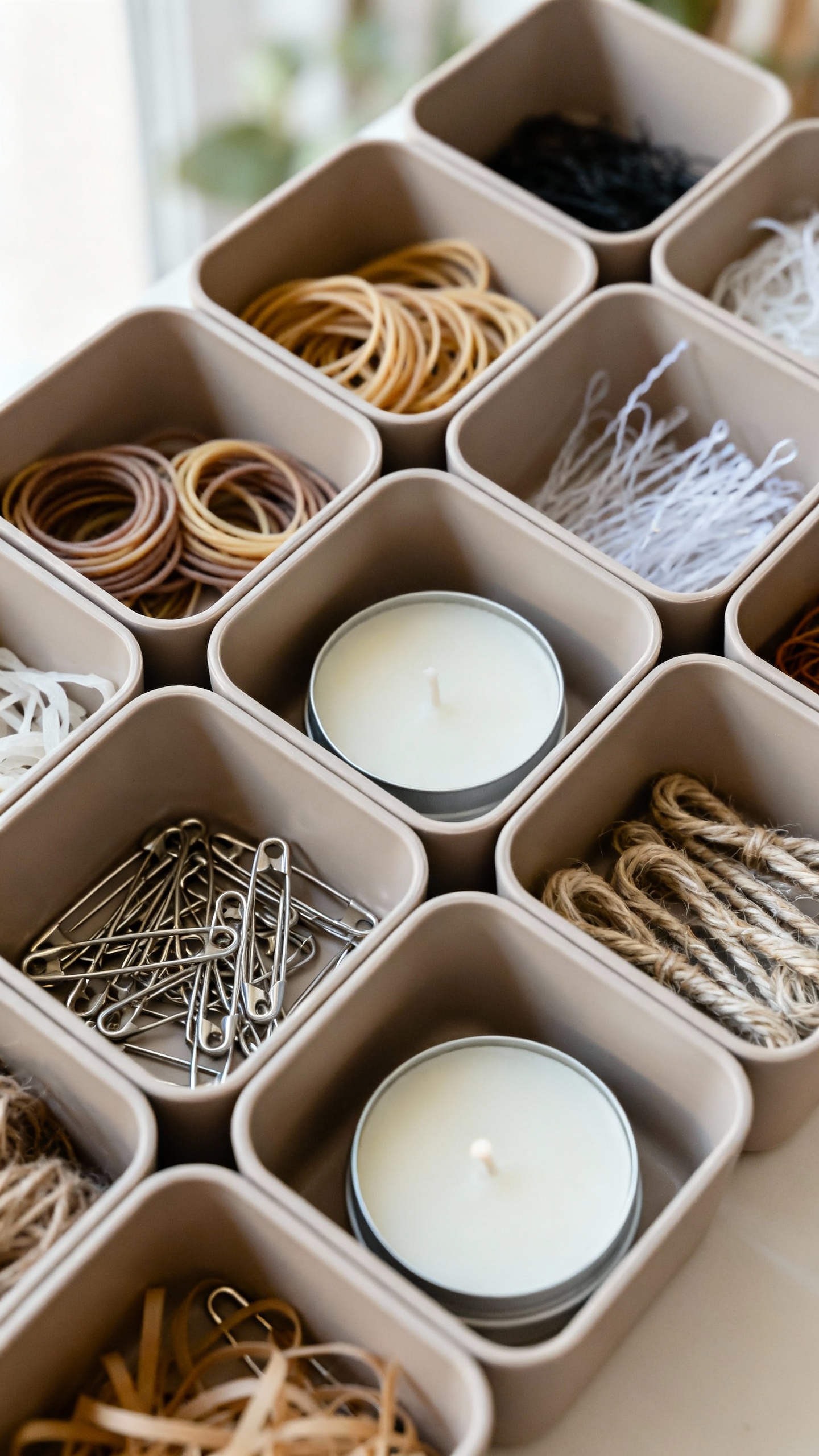
- Repurpose containers: Candle lids, ramekins, snack containers. Cute works, but functional wins.
- Measure first: Length, width, and depth. Don’t eyeball.FYI, deep organizers can block the drawer from closing.
My favorite low-cost setup
Use a non-slip liner, four small square bins for tiny bits, one long tray for writing utensils, and one medium tray for tools. That’s it. It’s modular and flexible.
It also makes you look suspiciously put together.
Label like you live with other humans (or forgetful future you)
Labels make re-filing a no-brainer. They also guilt-trip everyone into putting things back where they belong. The label can live on the front rim of the container or on top if it’s visible.
- Quick options: Masking tape + Sharpie.Done in 60 seconds.
- Pretty options: Label maker or clear label stickers for a clean look.
- Pro tip: Use nouns, not vibes. “Batteries” beats “Power stuff.”
Set simple rules so it stays organized
Maintenance keeps the drawer from mutiny. You don’t need a spreadsheet. You just need two tiny habits.
- One in, one out: If a new gadget goes in, remove something you don’t use.
- Micro tidy: Every Sunday night, 60 seconds to reset the trays.That’s it.
Stock limits prevent clutter re-growth
Decide how many of each item you’ll keep. For example:
- 3 pens, 1 Sharpie, 1 pencil
- 1 tape, 1 glue
- 1 charging brick, 2 cables you actually use
- 6–8 batteries of each common size
Once you hit the limit, you don’t buy more or you stash extras somewhere else. Boundaries are your friend.
So are closed lids.
Upgrade with small, nerdy wins
Want your drawer to feel “whoa, nice” every time you open it? A few quick improvements go a long way.
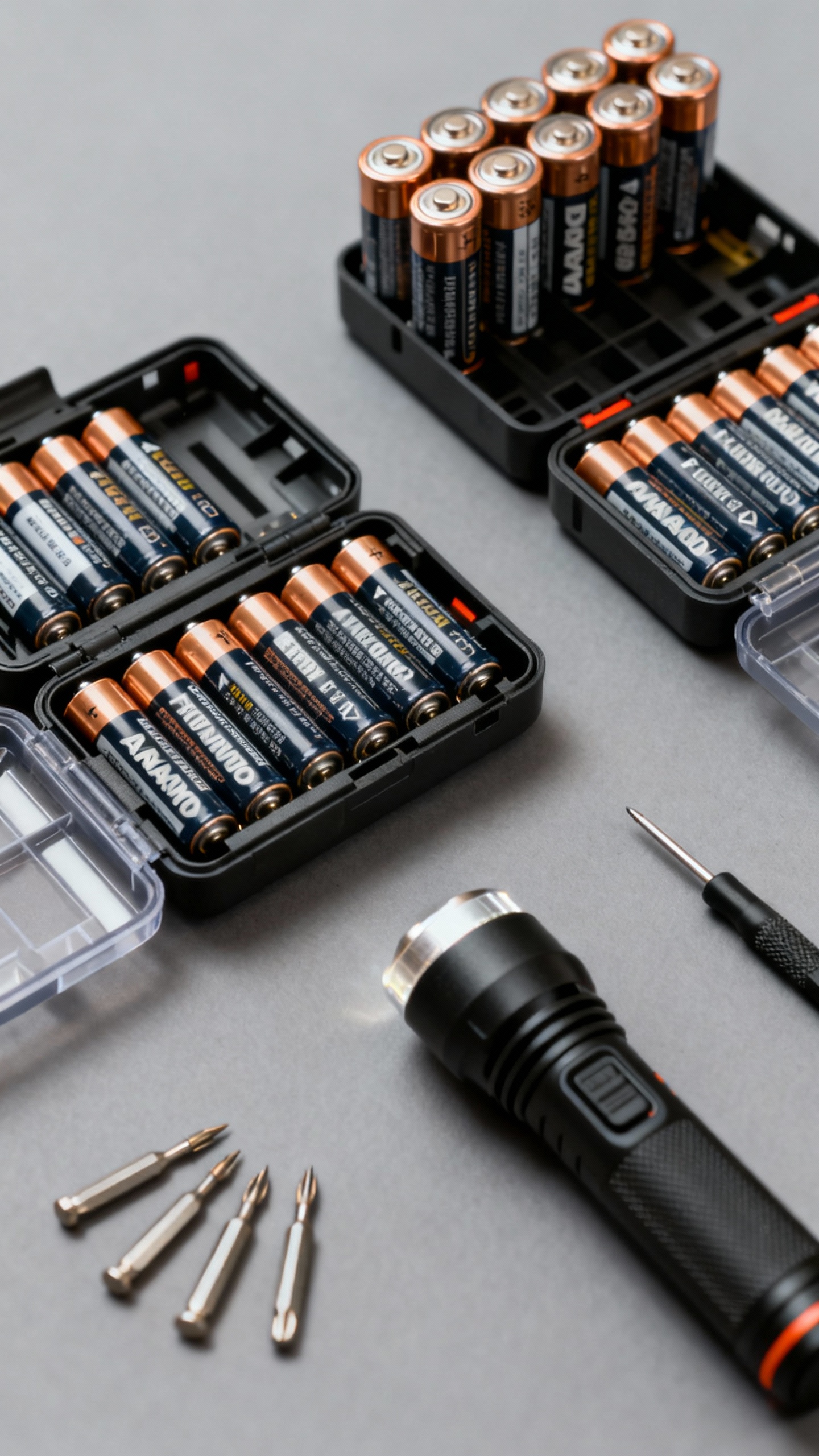
- Battery case: A compact organizer keeps sizes separate and prevents random rolls.
- Retractable measuring tape: Cleaner than the bulky metal one.
- Mini screwdriver with swappable bits: One tool, many jobs.
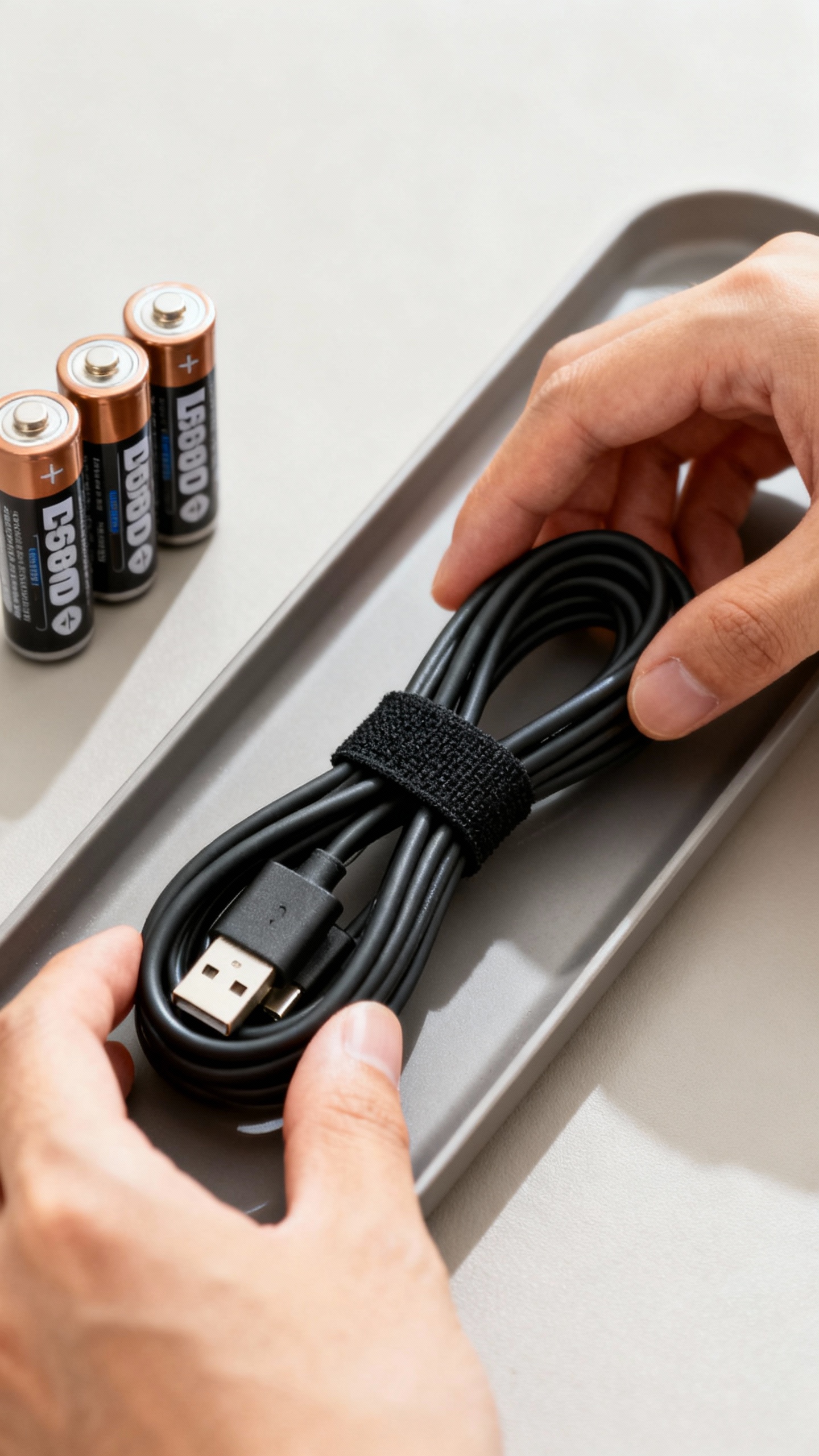
- Cable ties or Velcro straps: Tame the spaghetti. Your future self will cheer.
- Small flashlight: For power outages or hunting under the couch.
Safety check (boring but important)
Skip anything sharp and loose.
Use blade covers for utility knives. Keep medicines and super glue out if kids roam. No leaking batteries, ever. Recycle them responsibly.
Make it look good, because aesthetics motivate
Form inspires function. When the drawer looks nice, you’ll keep it that way.
Not everything needs to match, but a tiny bit of intention helps.
- Color coding: Neutral bins with a pop of color for the most-used zone.
- Symmetry: Place long items (pens, scissors) in the front for quick grabs.
- White space: Leave a small empty spot for quick drops. It prevents random pileups.
FAQs
What if my drawer is super shallow?
Use low-profile trays (about 1.5 inches high) and keep bulky items elsewhere. Choose flat scissors, a slim tape roll, and a collapsible measuring tape.
You can still create categories; you just go flatter and wider.
How do I handle chargers and cables?
Keep only the cords you use weekly. Coil each with a Velcro tie and store in a narrow tray. Label each cord with a tiny tag (e.g., “Kindle,” “Camera”).
Everything else moves to a tech bin outside the kitchen, IMO.
How often should I purge?
Do a 60-second reset weekly and a 5-minute purge every 2–3 months. Mark a recurring reminder on your phone. When the “misc” bin overflows, that’s your cue.
Can I combine the junk drawer with a mail station?
Yes, but keep it tight.
Add a slim letter tray and a tiny cup for stamps/paper clips. Incoming mail gets a spot, but you commit to clearing it every 48 hours. Otherwise, your drawer becomes a black hole again, FYI.
What if my family keeps dumping random stuff in there?
Make the categories blindingly obvious and label everything.
Keep a small “return to elsewhere” container on the counter for incoming orphans. Once a day, re-home them. Bonus: start saying “That’s not a junk drawer item” like a polite robot.
Do I need fancy organizers to succeed?
Nope.
Use what you have first. Repurpose small boxes and lids and add a drawer liner. If you love the setup after a week, then consider upgrading.
Try before you buy—your wallet will thank you.
Conclusion
A junk drawer doesn’t have to be a shame drawer. Give your essentials a few sensible categories, corral them with containers, and set tiny guardrails. You’ll grab what you need without the treasure hunt—and you might even smile when the drawer glides open.
Wild, right?