
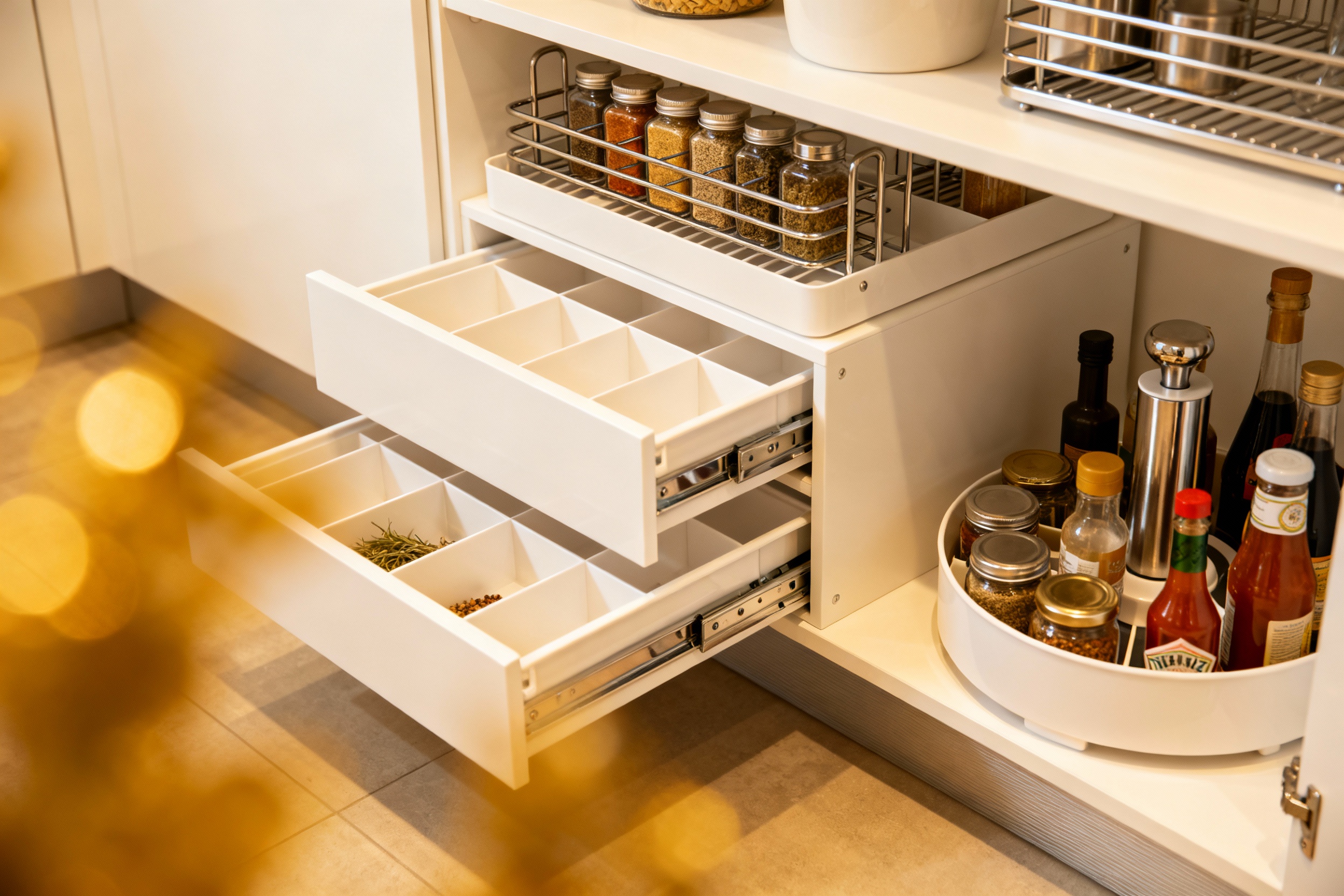
You don’t need a bigger kitchen—you need smarter storage. Those cabinets can hide a whole lot of chaos, and honestly, they usually do. But with the right organizers, you can turn that jumble of pans and mystery Tupperware lids into a setup that actually makes cooking fun.
Ready to stop playing cabinet Jenga every time you want a skillet?
Start with the Problem Zones
Every kitchen has three usual suspects: the pan cabinet, the spice situation, and the reusable container graveyard. If you fix those, everything else feels easier. Why?
Because those are the spots that cause the most daily drama. Let’s go after them first and win some quick victories.
The Pan Pile-Up
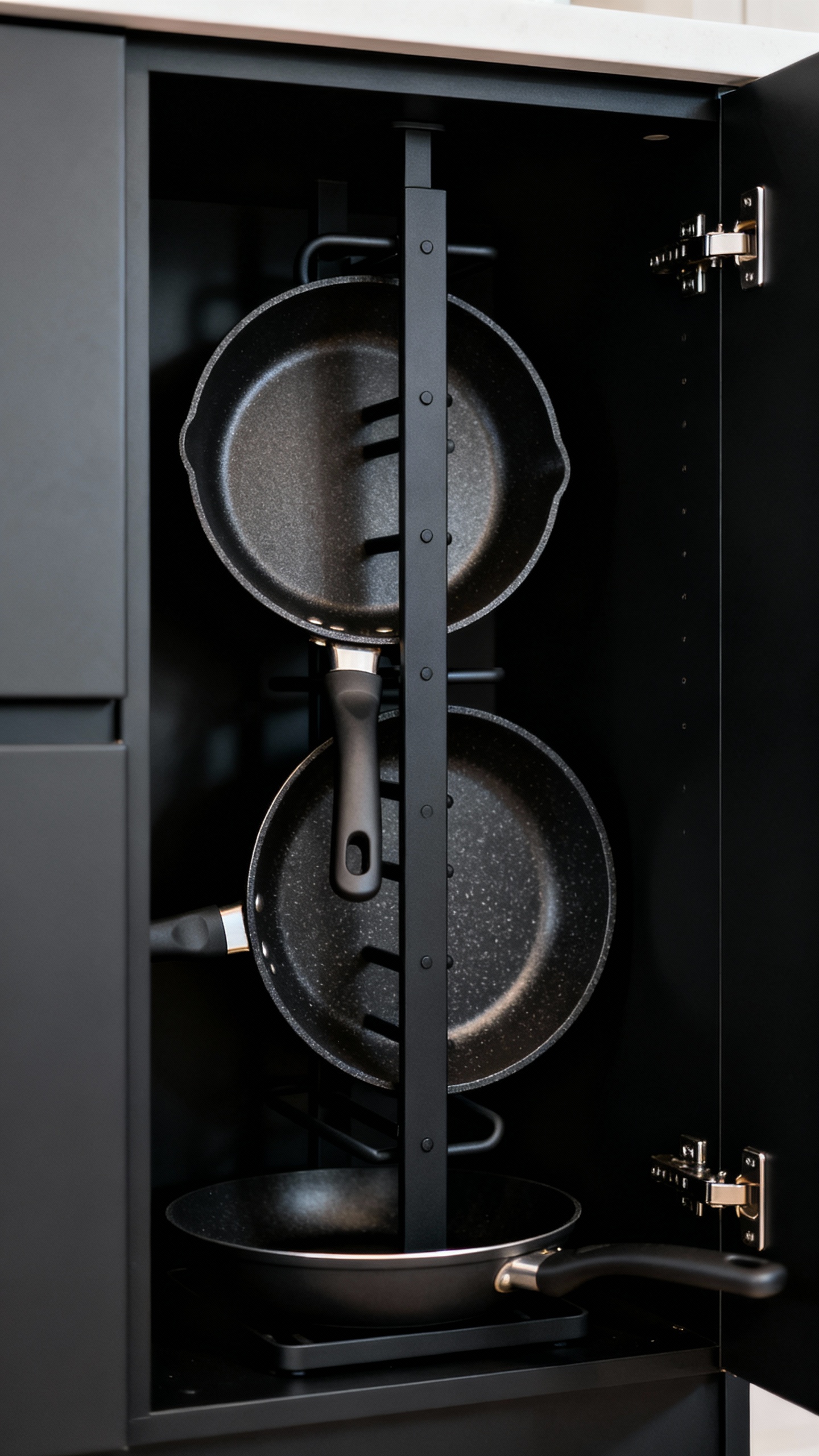
Stacking pans is a fast track to scratches, noise, and a minor meltdown. Add a vertical pan rack and store lids in a pull-out lid organizer.
You’ll grab what you need without digging.
The Spice Avalanche
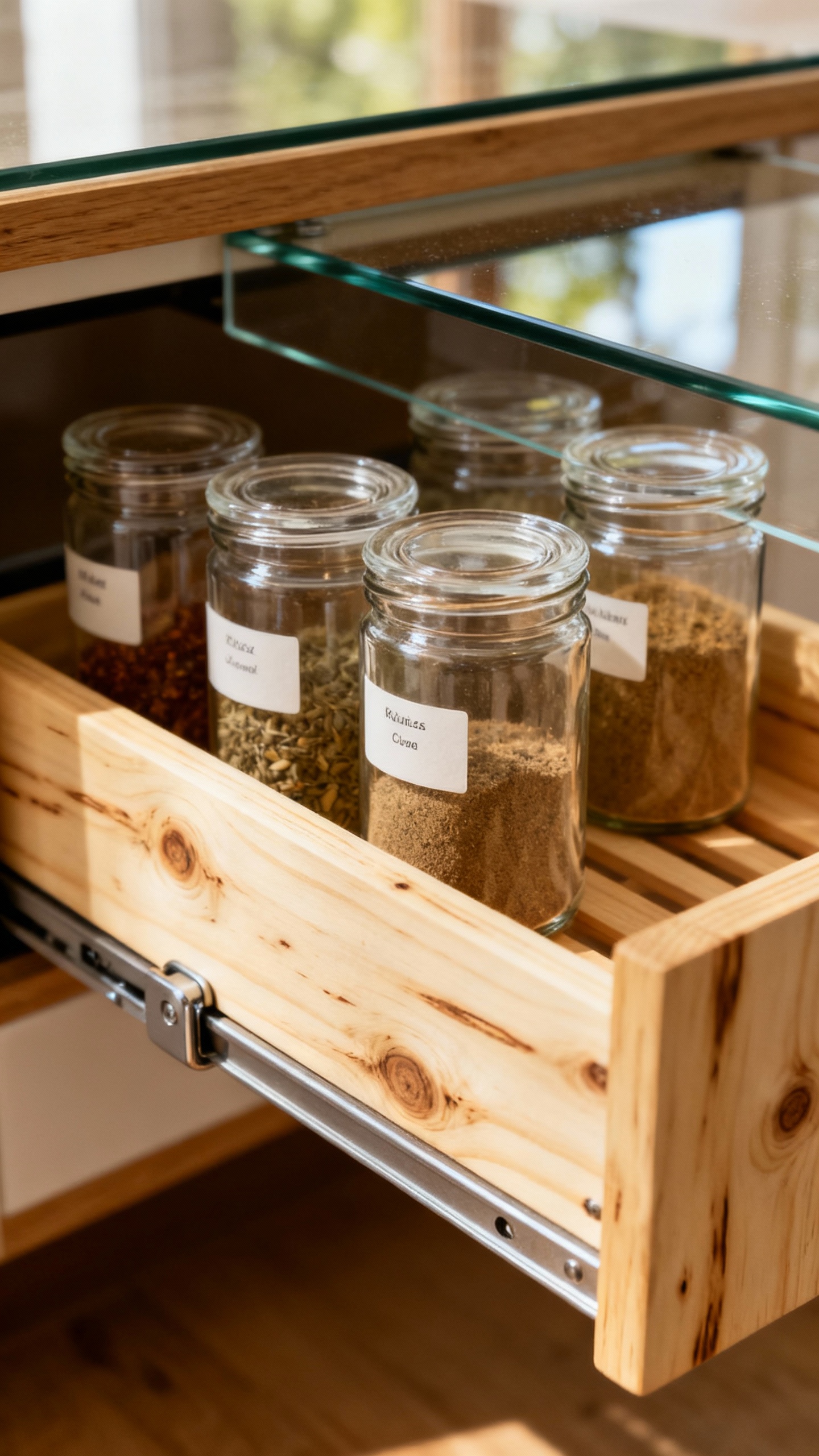
Spices multiply. Then they hide. Use tiered risers or a pull-out spice rack so labels face you, not the abyss.
Bonus points if you decant into matching jars with clear labels. It’s organized and ridiculously satisfying.
The Container Catastrophe
Use lid-only organizers and nest the containers by size. Lids on one side, containers on the other.
No more “does this lid fit?” game. Spoiler: it never did.
Pull-Outs: The MVPs of Cabinet Organization
If you take one tip from this, make it pull-out everything. They turn deep, dark cabinets into usable storage with zero squatting.
- Pull-out shelves: Great for pots, small appliances, and baking dishes.
- Pull-out wire baskets: Perfect for snacks, oils, and cans—easy to clean, too.
- Pull-out waste/recycling: Hide the bin and free up floor space.
FYI, measure your cabinet width and depth twice.
Then check the slide hardware specs. Nothing kills momentum like a drawer that stops an inch too soon.
Best Materials for Pull-Outs
– Birch or bamboo for a solid, furniture-like feel. – Powder-coated steel for durability and easy cleaning. – Full-extension slides so you can actually reach the back. Revolutionary, I know.
Make the Most of Vertical Space
Cabinets are tall caves.
Use the height. Add shelf risers to double your shelf space instantly. Put short items up top, tall ones below.
No more stacking bowls like a game of reverse Tetris.
Door-Mounted Organizers
The inside of your cabinet doors is prime real estate. Use it for:
- Foil and wrap racks
- Spice clips (chili flakes at the ready)
- Cutting board sleeves
Just check your door clearance. You don’t want to invent a new sound called “hinge heartbreak.”
Drawer Dividers That Actually Work
Junk drawers happen when you don’t give things homes.
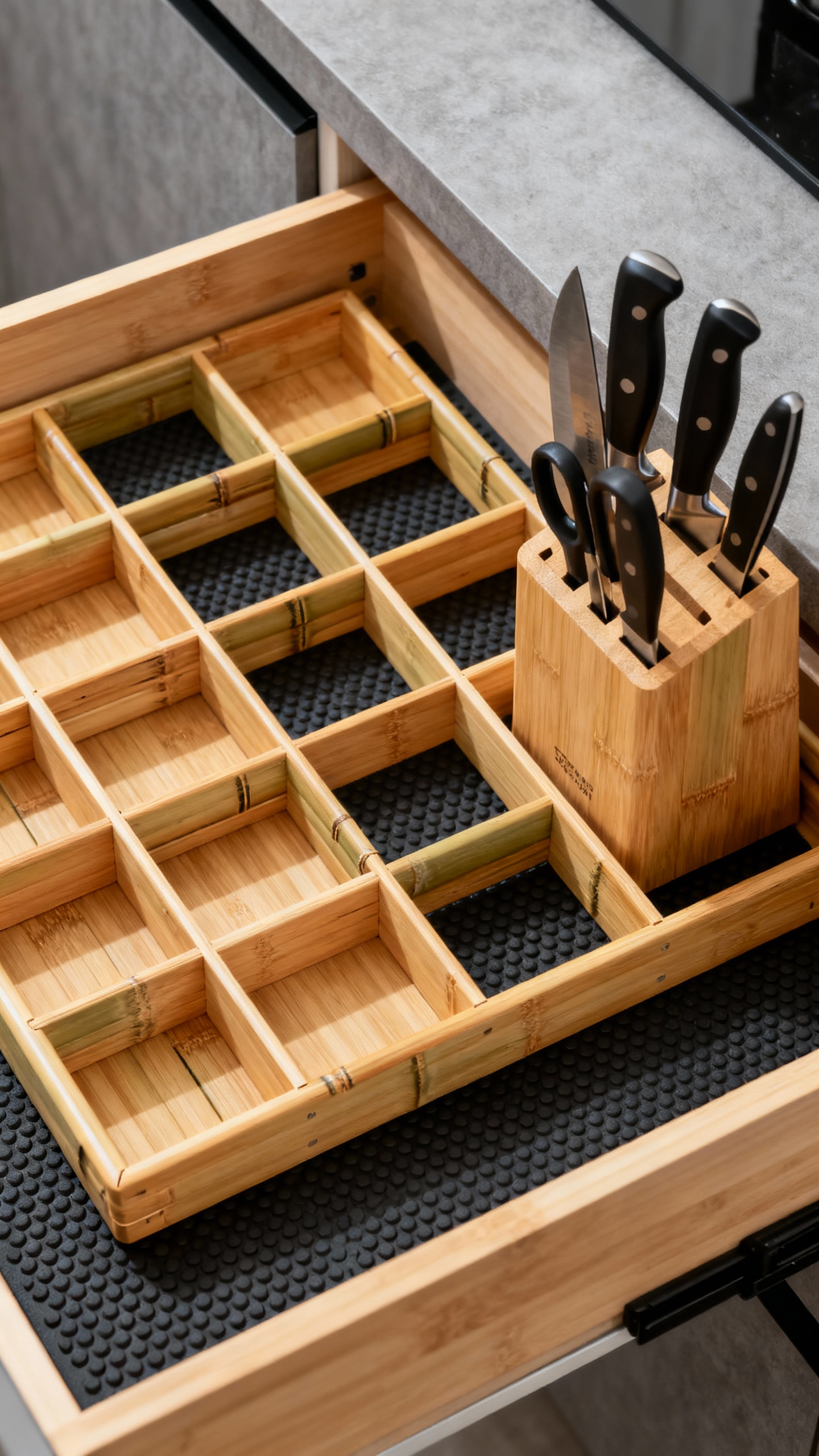
Install adjustable drawer dividers or custom-fit organizers, and watch chaos chill out.
- Utensils: Long slots for spatulas, tight sections for measuring spoons.
- Knives: In-drawer knife blocks if you hate counter clutter.
- Baking tools: Rolling pin, bench scraper, cookie cutters—each gets a defined spot.
IMO, bamboo dividers look nice and grip well. Plastic works, but it can slide unless you add liners. Speaking of…
Don’t Skip Drawer and Shelf Liners
Liners protect surfaces, stop sliding, and make cleanup painless.
Choose grippy rubber for drawers and wipeable clear film for shelves with oils and sauces. Your future self will thank you.
Corners: From Wasted Space to Secret Weapon
Corner cabinets are notorious. You open the door, stare into darkness, and close it again.
Fix that with smart hardware.
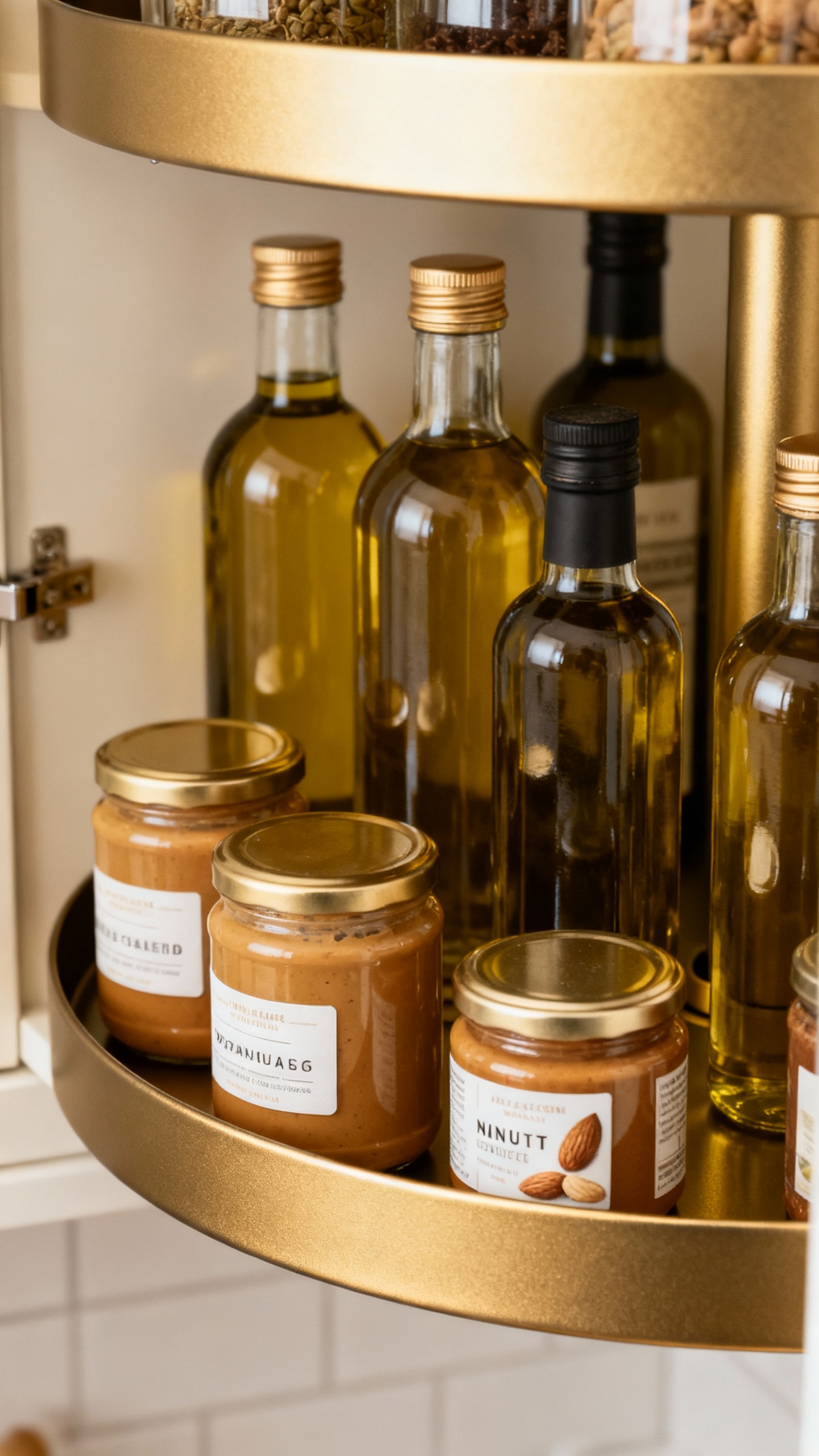
- Lazy Susan (pie-cut or kidney): Swivel to win. Great for baking supplies and bulk items.
- Blind-corner pull-outs: These slide out and over so nothing hides in the back.
- Swing-out trays: Each tray glides into the light like, “Surprise, I’m here!”
Yes, these cost more than a basic shelf. But they unlock space you literally couldn’t use before.
That’s worth it.
Zone Your Cabinets Like a Pro
Clarity beats clutter. Group by task, keep tools near where you use them, and stop crossing the kitchen 14 times to plate dinner.
Suggested Zones
– Cooking zone: Pans, oils, spices, utensils near the stove. – Prep zone: Cutting boards, knives, mixing bowls by the largest counter. – Baking zone: Sheets, tins, measuring gear near the oven. – Coffee/tea zone: Mugs, filters, kettle accessories—preferably near water. – Lunch zone: Containers, lids, wraps, and snacks at eye level for easy grab-and-go. Label shelves or the inside of doors if you share your kitchen with other humans.
Or gremlins. Same difference.
Smart Solutions for Small Kitchens
Tiny kitchen? Cool, we can still overachieve.
- Over-the-door racks: Use pantry or cabinet doors for spices, snacks, or wraps.
- Stackable bins: Clear bins show what you have and stop the avalanche effect.
- Magnetic strips: Mount inside cabinet doors for knives, measuring spoons, or metal lids.
- Under-shelf baskets: Slide onto shelves to create bonus levels for dish towels or napkins.
Keep the front half of each shelf free for frequently used items.
Store backups and extras in the back. Accessibility matters more than aesthetics—though when you do both, chef’s kiss.
Materials, Maintenance, and Money
You don’t need to drop a fortune. You just need a plan.
- Best budget buys: Shelf risers, lid organizers, and basic pull-out baskets.
- Worth-the-splurge items: Full-extension pull-outs, blind-corner hardware, custom drawer inserts.
- Maintenance tips: Do a 5-minute reset weekly.Wipe shelves monthly. Edit duplicates quarterly—no one needs seven spatulas. Probably.
FYI: Avoid flimsy plastic bins for heavy stuff like cans.
Go for metal or thick acrylic. Your shelves will live longer.
Quick Setup Plan (Weekend-Friendly)
Want a roadmap? Here’s the game plan.
- Empty and sort. Keep, donate, toss.Get ruthless.
- Measure everything. Height, width, depth, door clearance.
- Install the hardware. Start with pull-outs and racks.
- Zone your cabinets. Put things where you use them.
- Label lightly. Inside doors or shelf fronts to keep the system alive.
IMO, do pans and spices first for an instant sanity boost. Motivation is a renewable resource, but you have to win early.
FAQ
What’s the most impactful organizer to start with?
Go with a pull-out shelf in your most-used lower cabinet. It immediately makes deep space usable and stops the bend-and-dig routine.
Pair it with a lid organizer if you cook often.
How do I keep organizers from sliding around?
Use non-slip liners under bins and trays. For dividers, choose tension-fit or screw-mounted models. Some bins include adhesive feet—cheap, effective, and removable.
Are bamboo organizers better than plastic?
Bamboo looks nicer and feels sturdier, but plastic wins for moisture resistance and easy cleaning.
Mix and match based on the cabinet: bamboo for utensils and drawers, plastic or metal near sinks and oils.
What should I put in a lazy Susan?
Store round or frequently used items like oils, vinegars, nut butters, and baking jars. Avoid tall, tippy bottles that collide or anything square that wastes the rounded edges.
Can I organize without drilling?
Yes. Use tension dividers, freestanding racks, over-the-door organizers, and adhesive hooks.
Save drilling for heavy pull-outs or door-mounted systems where stability matters.
How do I keep the system from falling apart?
Do a quick weekly tidy. Return strays to their zones, wipe spills, and adjust dividers if something keeps migrating. Organization isn’t a one-time event—it’s a tiny habit that makes cooking way easier.
Conclusion
You don’t need to burn it all down and start fresh.
Add the right organizers, use vertical space, and set smart zones. Your cabinets will work like a well-trained crew instead of a chaotic mess. Do the first cabinet today, ride the momentum, and enjoy the kind of kitchen that makes you actually want to cook.