
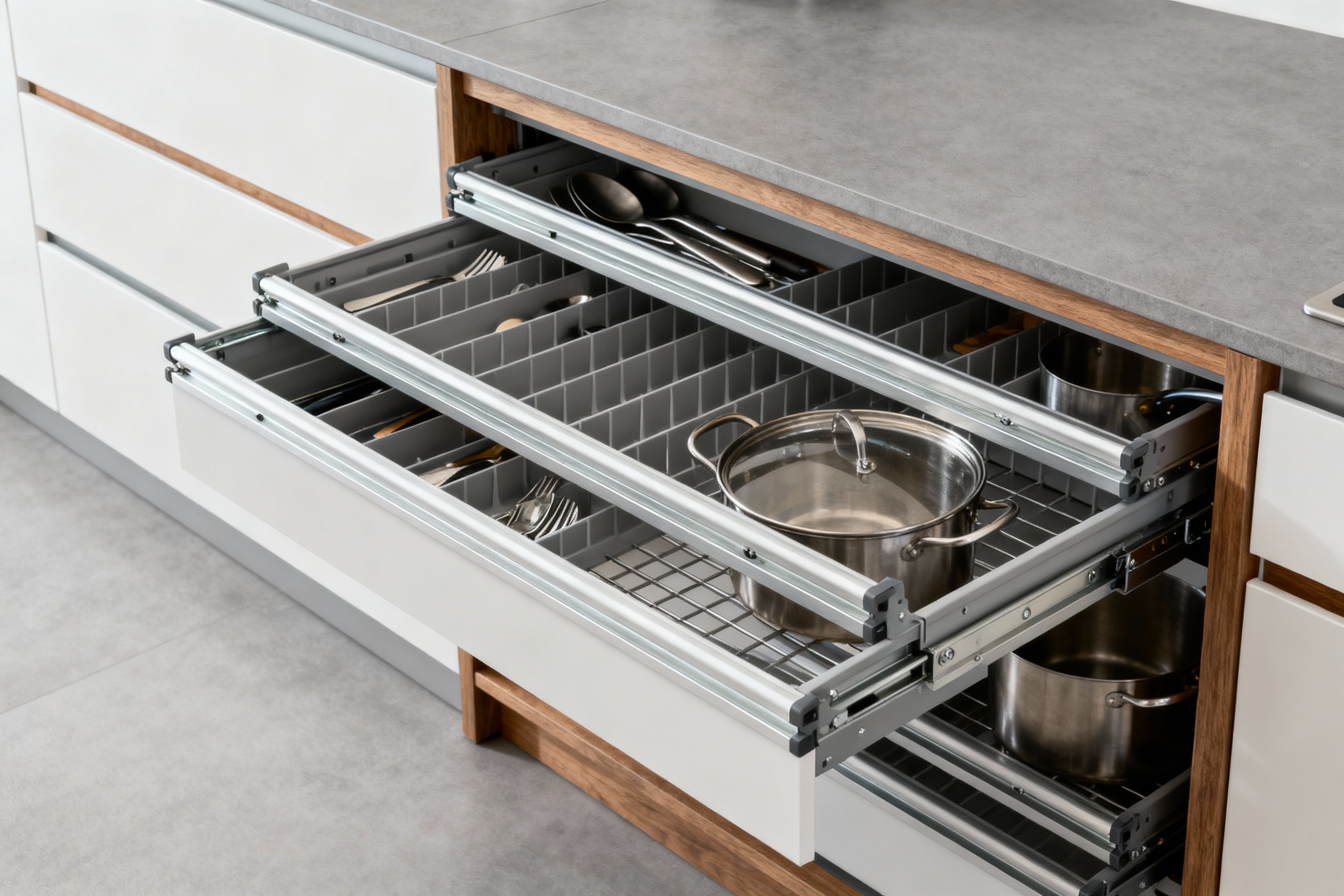
Deep base cabinets hide stuff like a sock-eating dryer. You know there’s a colander back there… somewhere. Pull-out organizers fix that mess fast.
They bring everything to you, so you stop kneeling, digging, and muttering at your spice hoard. Let’s turn those dark, deep cabinets into the MVPs of your kitchen.
Why Deep Cabinets Need Pull-Outs (Yesterday)
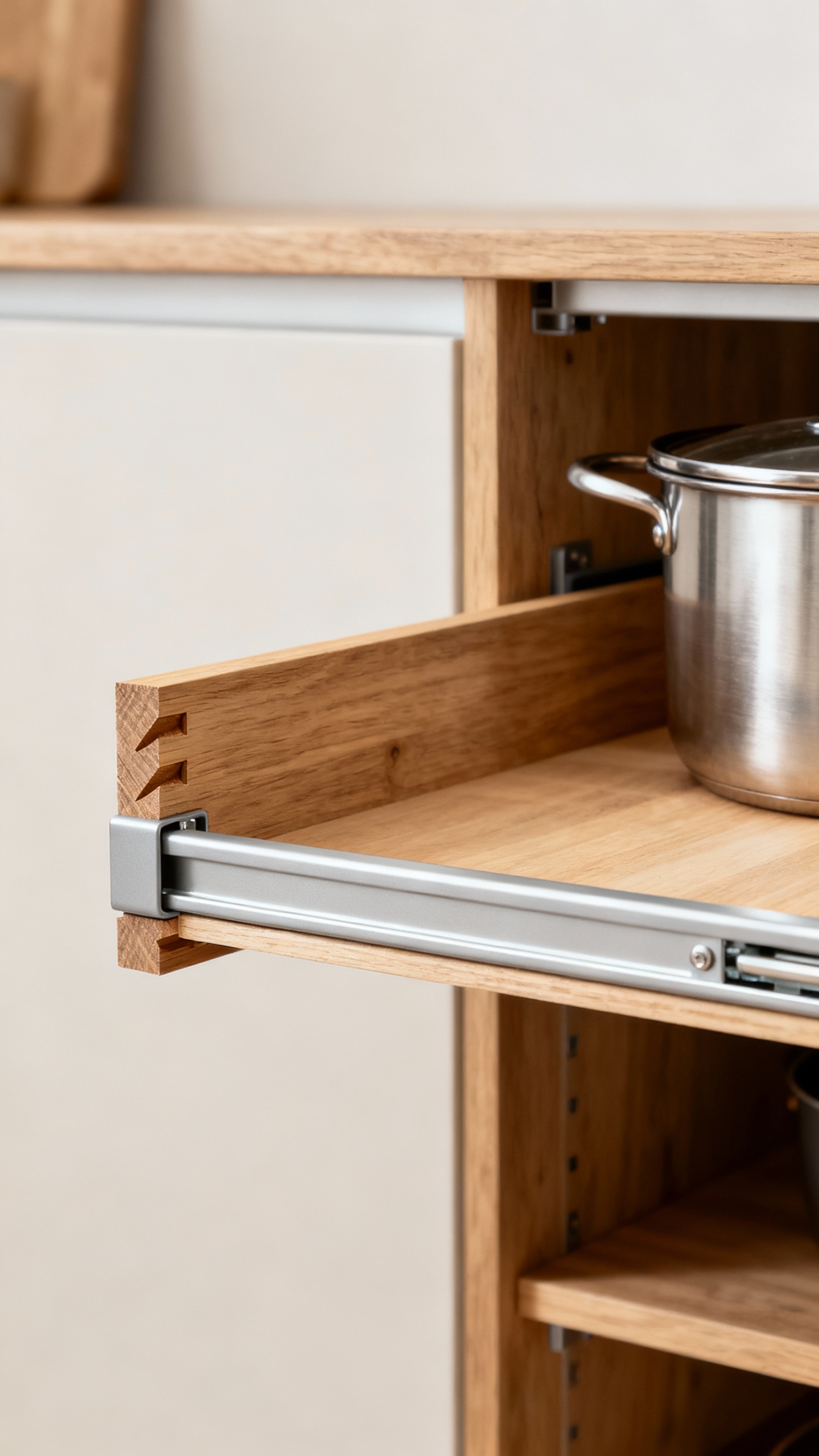
You can keep stacking baking sheets and hope for the best, or you can install pull-outs and get instant access. Pull-out organizers slide all the way out, so you see every item.
No more duplicate cans of tomatoes. No more mystery lids. Bottom line: You gain storage, visibility, and sanity. Less rummaging = faster cooking.
Types of Pull-Out Organizers That Actually Work
Not all pull-outs handle deep cabinets well.
Some waste space or wobble like a shopping cart. These do the job and then some.
1) Full-Extension Roll-Out Shelves
These look like shallow drawers inside your cabinets. They mount on rails and glide fully out, so the back no longer swallows your stuff.
- Best for: Pots, small appliances, mixing bowls
- Pros: Versatile, easy to load, can stack two per cabinet
- Cons: You lose a bit of height clearance because of the rails
Pro tip: Choose full-extension or over-travel slides.
Standard slides stop short, and that defeats the entire point.
2) Two-Tier Pull-Outs
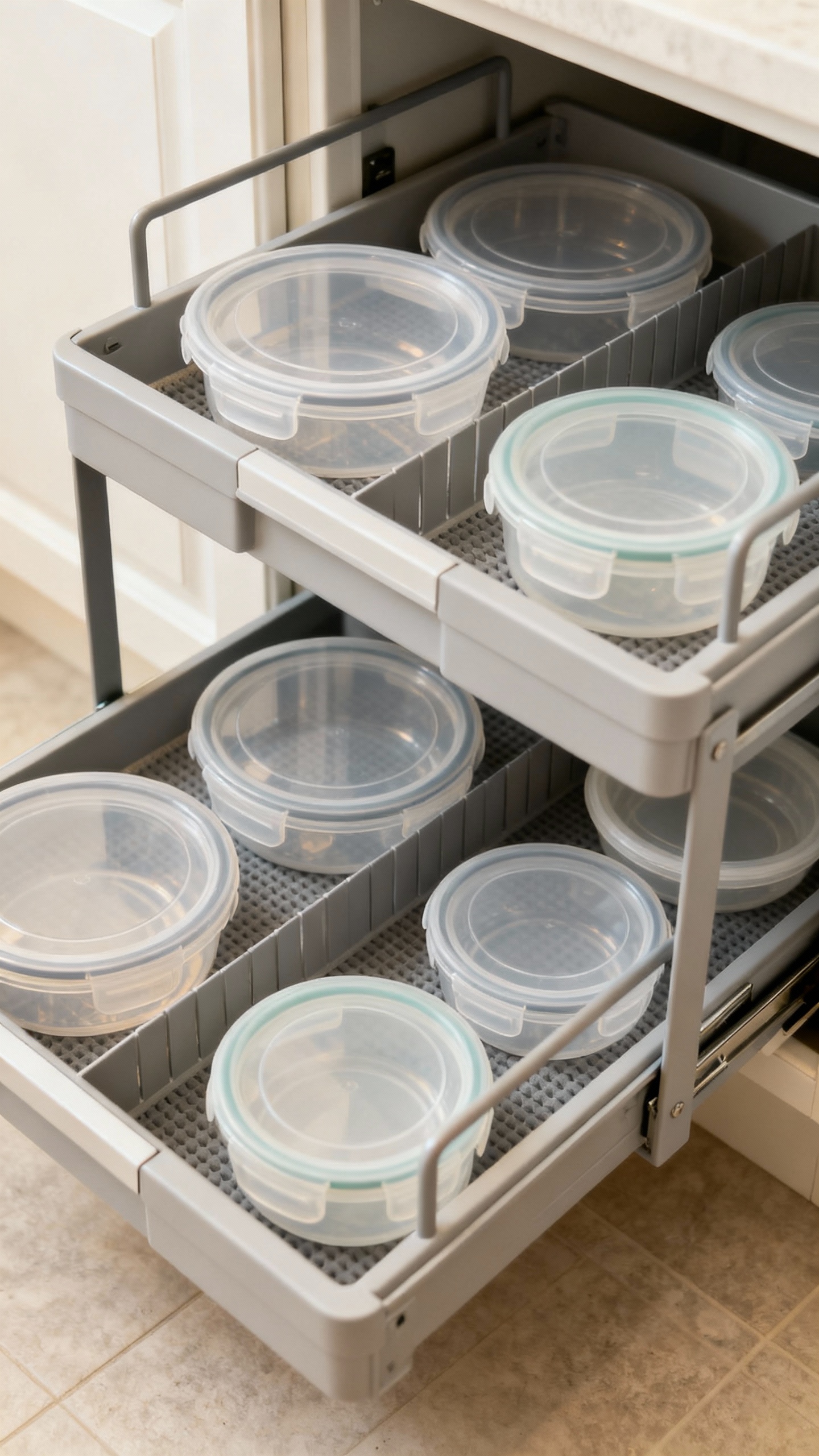
Two levels ride out together—great for deep cabinets with tall openings. They basically double your accessible space.
- Best for: Food storage containers, lids, pantry overflow
- Pros: Max storage density, super organized
- Cons: Tall items may not fit on the top tier
3) Pull-Out Pan and Lid Racks
Vertical dividers keep sheets, cutting boards, and lids upright. Pull the whole rack out, grab what you need, done.
- Best for: Baking sheets, trays, serving platters, lids
- Pros: No clattering, zero stacking
- Cons: Narrow items can slide unless you pick tight dividers
4) Blind-Corner Pull-Outs (Magic Corners)
If you have that dreaded “L” corner cabinet, these are the heroes.
They swing and slide the back section into view like a secret bookshelf door.
- Best for: Corners that swallow crockpots and your will to live
- Pros: Dramatic storage win
- Cons: Pricey and measurements matter a lot
5) Pull-Out Trash and Recycling Centers
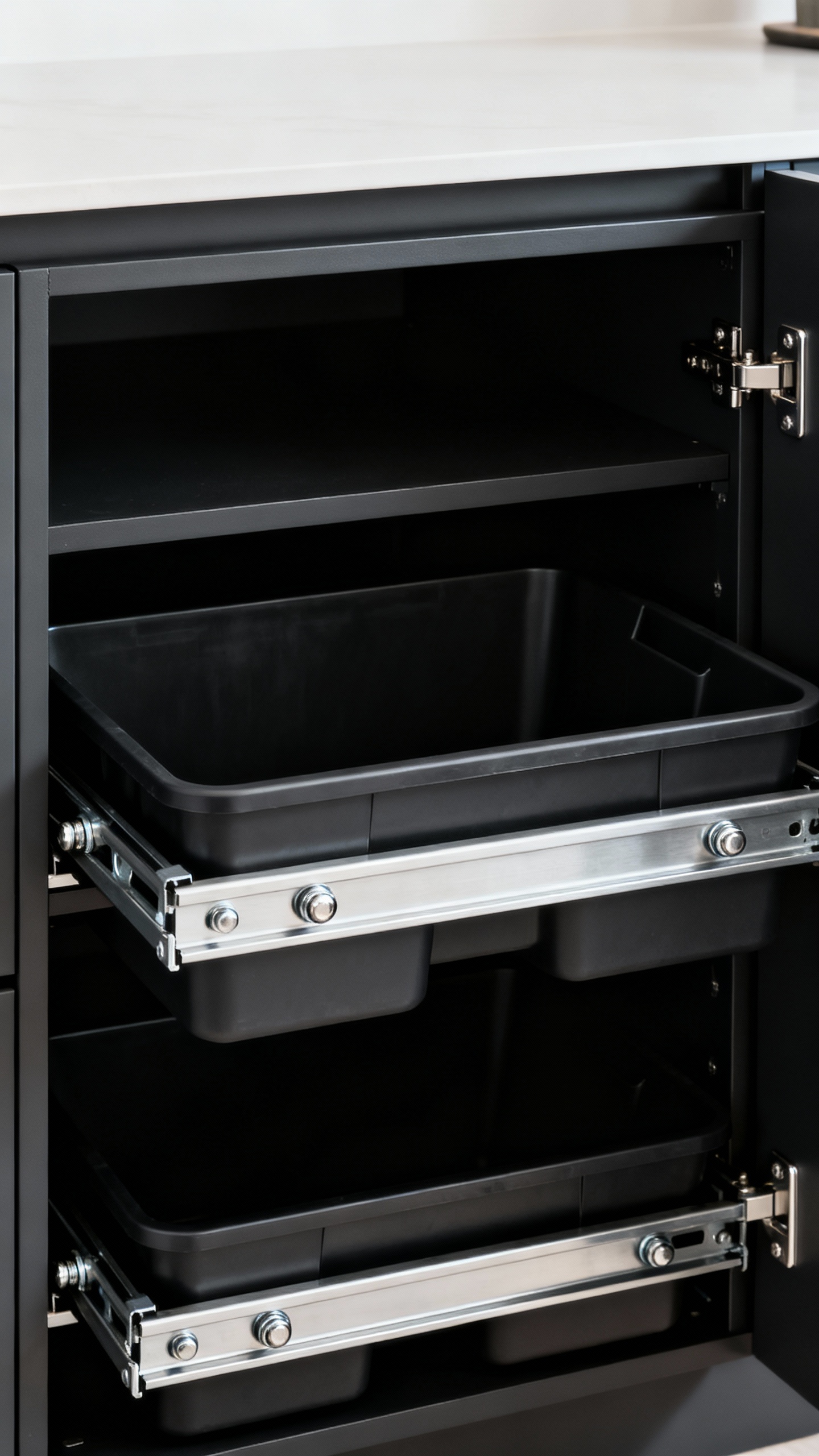
Not glamorous, but endlessly useful. A deep cabinet often fits double bins on one pull-out.
- Best for: Trash + recycling (or compost)
- Pros: Smell control, cleaner floor space
- Cons: Needs sturdy slides and door-mount hardware
Key Features That Separate Winners from Wobblers
The hardware matters more than the basket. FYI, cheap slides turn any organizer into a headache.
- Slides: Look for full-extension, ball-bearing, and ideally soft-close.Over-travel slides are a nice upgrade.
- Weight rating: Go 75–100 lb minimum for pots and appliances.
- Materials: Dovetailed wood or heavy-gauge steel > flimsy wire. Powder-coated metal resists rust.
- Adjustability: Movable dividers and height-adjustable tiers make the system future-proof.
- Door-mount kits: Lets the cabinet door pull the organizer—fewer steps, cleaner look.
Measure Once, Order Right (Seriously)
Deep cabinets vary. Measure like you’re fitting a space capsule.
- Width: Measure clear opening between face-frame stiles (or box sides on frameless).Subtract hinges or door hardware that intrudes.
- Depth: Measure to the back panel. Account for any plumbing or outlets inside.
- Height: Check the door opening and inside height, especially if you plan two tiers.
- Obstructions: Note hinges, gas lines, water shutoffs, and center stiles.
Face-Frame vs. Frameless Cabinets
Face-frame cabinets need spacers or brackets so slides clear the frame.
Frameless usually mount directly to the sides. Many brands include the right brackets—check before you buy.
Installation: DIY or Call a Pro?
You can handle most pull-outs with a drill, level, and patience. The trickiest part?
Setting slides perfectly square so the unit glides smoothly.
- DIY-friendly: Single roll-outs, pan racks, door-mount trash units
- Pro-worthy: Blind-corner systems, retrofits with plumbing or gas lines, custom widths
Quick install flow:
- Dry-fit the slide hardware inside the cabinet.
- Mark pilot holes and pre-drill (use a depth stop so you don’t blow through).
- Mount slides level and parallel—use a spacer block for accuracy.
- Attach the organizer, then test with weight. Adjust as needed.
Top Picks by Use Case (IMO)
I’ve installed and tested a bunch. These categories rarely miss.
Best for Heavy Pots and Pans
Deep wooden roll-outs with 100-lb soft-close slides. They feel like real drawers and carry serious weight.
Add a lid rack on the back half for bonus sanity.
Best for Baking Fans
Pull-out vertical divider racks + a shallow roll-out below. Keep sheets, racks, and boards upright; store parchment and cutters underneath.
Best for Food Storage Containers
Two-tier pull-out with adjustable dividers. Dedicate the top to lids, bottom to bases. You’ll never wrestle the Tupperware avalanche again.
Best for Small Appliances
Extra-deep, single roll-out with a non-slip mat. Park the blender, food processor, and slow cooker there. Your back will send a thank-you note.
Best for Blind Corners
Full corner pull-out (aka Magic Corner) with soft-close. It’s the price of admission for dead corners, but it turns dead space into prime storage.
Smart Add-Ons That Make a Big Difference
You don’t need a full remodel.
Small tweaks help a lot.
- Non-slip liners: Stop sliding and clanking, especially with metal baskets.
- Clip-on labels: Label the front rail. Your future self will thank you.
- Door-mounted spice racks: Use the door interior for little items.
- Under-shelf lighting: Stick-on LEDs help in deep, dark cabinets. Cheap, huge impact.
Common Mistakes to Avoid
We’ve all done at least one of these.
Learn from our collective chaos.
- Buying the widest unit that fits on paper: Leave 1/4 inch clearance each side. Doors and hinges eat space.
- Ignoring weight ratings: Cast-iron + cheap slides = squeaky regret.
- Mounting out of square: If it binds empty, it will jam loaded. Shim until perfect.
- Forgetting the door swing: Trash pull-outs need full door clearance.Measure twice.
- Skipping soft-close: It’s a small upcharge that saves noise and wear. FYI, worth it.
FAQ
Do I need custom pull-outs, or will standard sizes fit?
Most cabinets accept standard-width pull-outs if you measure carefully and use spacer brackets. Custom helps when you have odd widths, center stiles, or tight plumbing.
If you’re within 1/2 inch of a stock size, you can usually make it work.
Can I install pull-outs in a rental?
Often, yes—choose bottom-mounted units that screw into the cabinet floor and avoid door-mount kits. Keep screw holes small and patchable. Or use standalone rolling caddies if your lease frowns on hardware.
What’s better: wire baskets or solid shelves?
Wire baskets ventilate and cost less, but small items tip over.
Solid shelves look finished and hold liners but weigh more. IMO, go solid wood or heavy steel for pots and appliances, wire for snack bins and linens.
How do I clean and maintain them?
Vacuum crumbs, wipe with mild soap, and relube slides yearly with a silicone spray if needed. Tighten loose screws before they wobble the whole setup.
If a slide drags, check alignment first—90% of “bad slides” are just crooked screws.
Can I stack two roll-outs in one deep cabinet?
Absolutely. Measure inside height, subtract slide and shelf thickness, and leave 1–2 inches of clearance for your tallest item on each shelf. Put the heavier stuff on the lower roll-out for stability.
Are blind-corner pull-outs worth the cost?
If you actually use the corner for storage, yes.
They recover space you’d never reach otherwise. If that cabinet just collects party platters once a year, a simpler lazy Susan might be enough.
Conclusion
Deep cabinets don’t need to be black holes. With the right pull-outs—sturdy slides, smart dividers, and a bit of planning—you’ll use every inch without crawling on the floor.
Pick the style that matches your gear, measure like a pro, and install with care. IMO, the first time you pull out a shelf and instantly find that Dutch oven, you’ll wonder why you waited so long.