
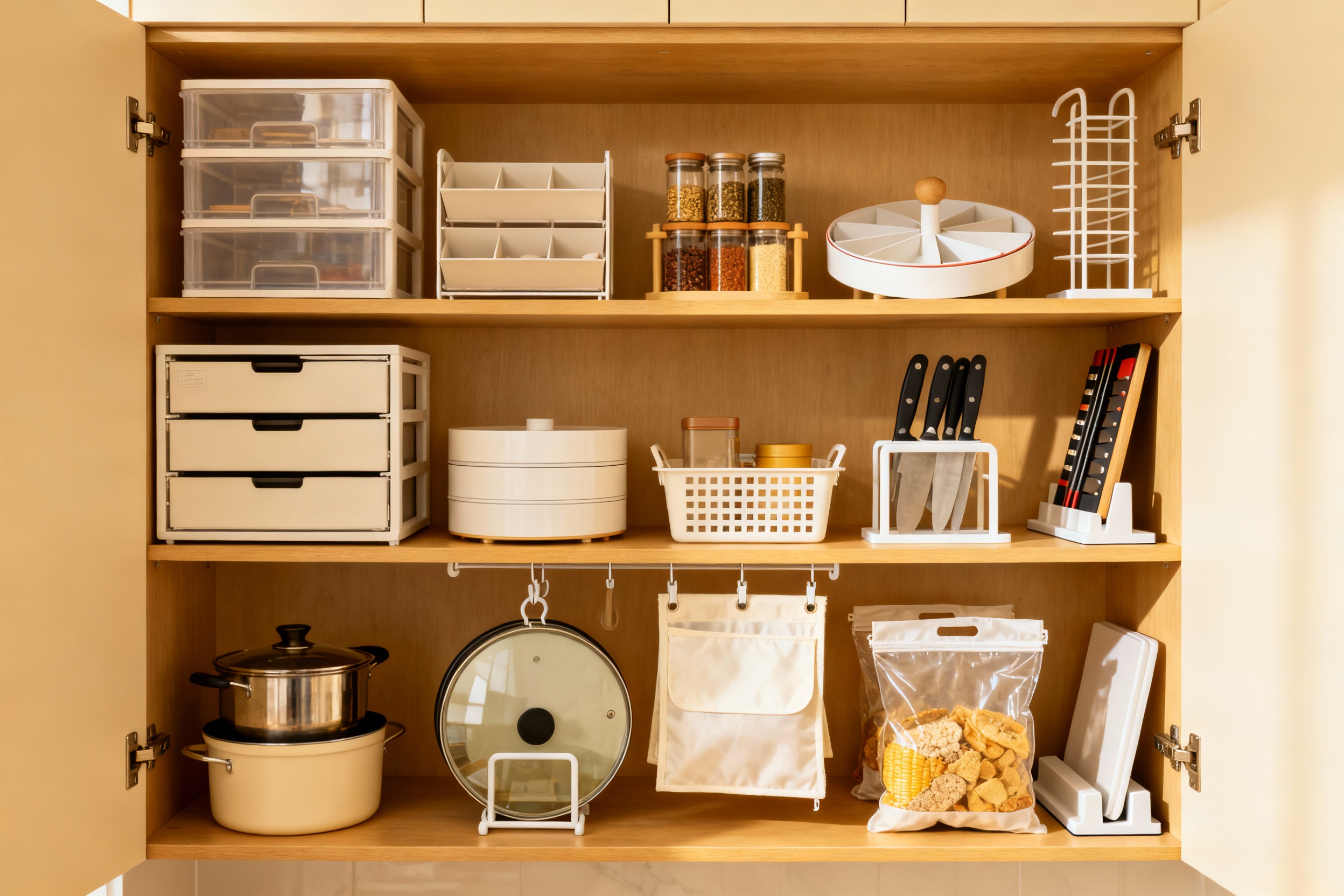
Your cabinets aren’t chaotic because you’re messy—you just don’t have the right gear. A few smart organizers can turn that avalanche of pans and mystery Tupperware into a kitchen that actually makes sense. I tested, stalked reviews, and compared specs to find the stuff that works in real kitchens, not just Pinterest.
Let’s tame those cabinets so you can stop playing Jenga with your baking sheets.
The Quick Wins: Small Helpers with Big Impact
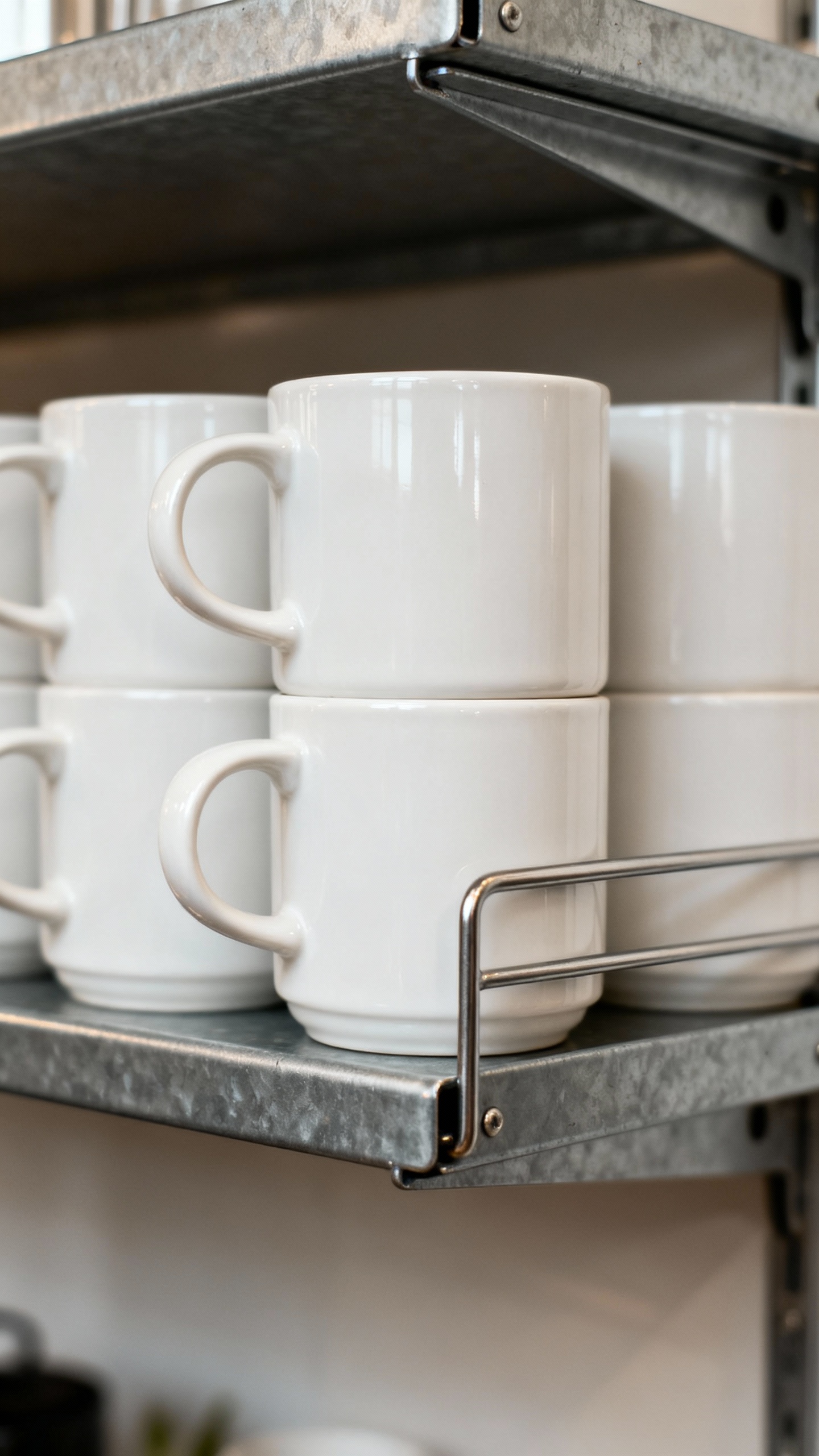
Start here if you want immediate results without tools or drama.
- Expandable Shelf Risers – These create double-decker storage on a single shelf. Look for steel or bamboo risers that expand 12–24 inches and hold at least 30 lbs. Suddenly your mugs and cereal bowls don’t fight for space.
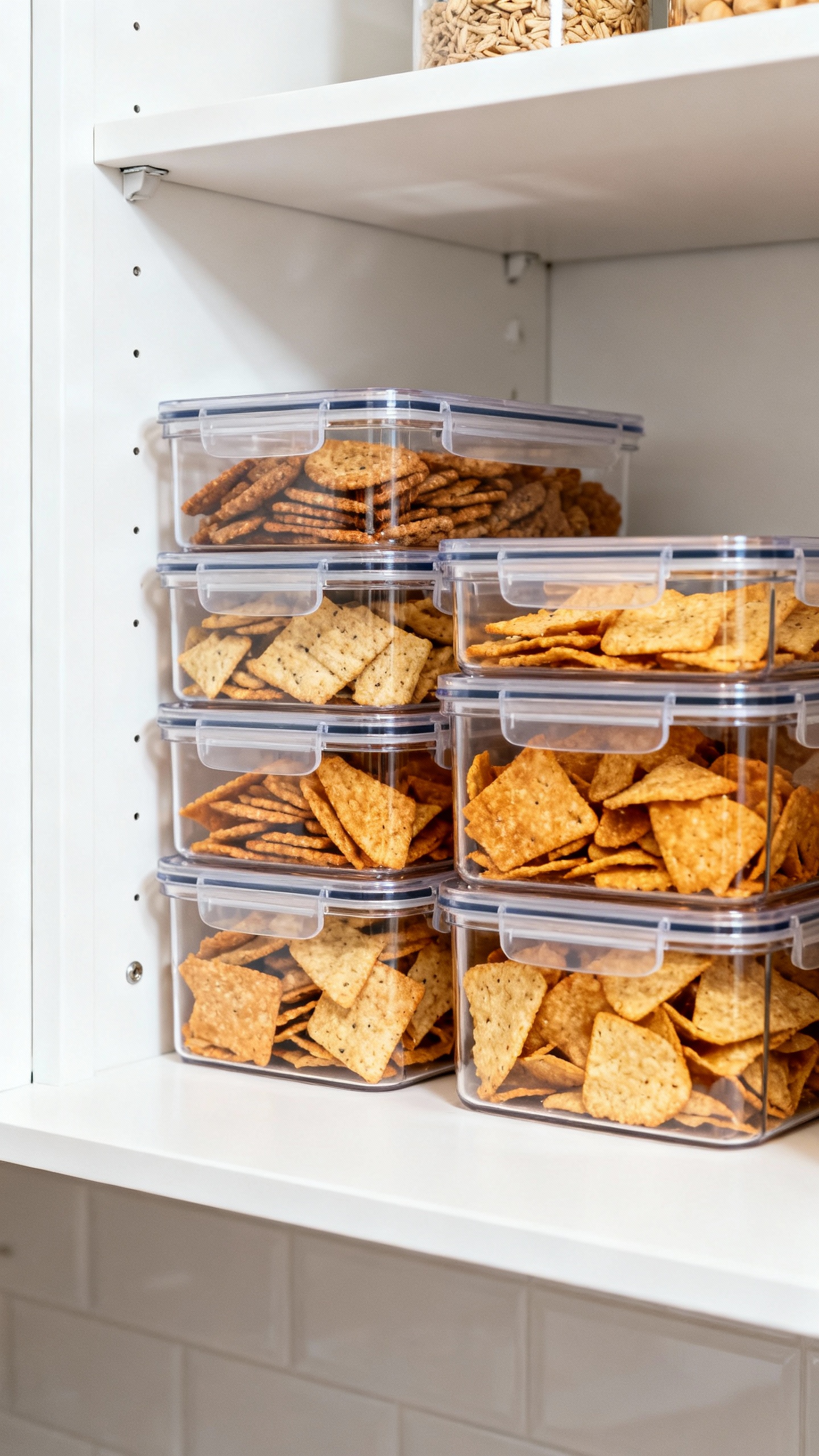
- Clear Stacking Bins with Handles – Transparent bins let you see everything and pull it out like a drawer.Great for snacks, spices, and packets. Choose BPA-free acrylic or PET with textured bottoms so bottles don’t slide.
- Turntables (a.k.a. Lazy Susans) – Drop one in a corner cabinet and get access to every bottle without stuffing your arm into Narnia.Get a 12–16 inch model with non-slip mats and a small lip.
The 10 Best Amazon Finds for 2025
Real upgrades, real cabinets, real reviews. I picked these because they solve common pain points: wasted vertical space, chaotic lids, wobbly stacks, and back-of-cabinet blindness.
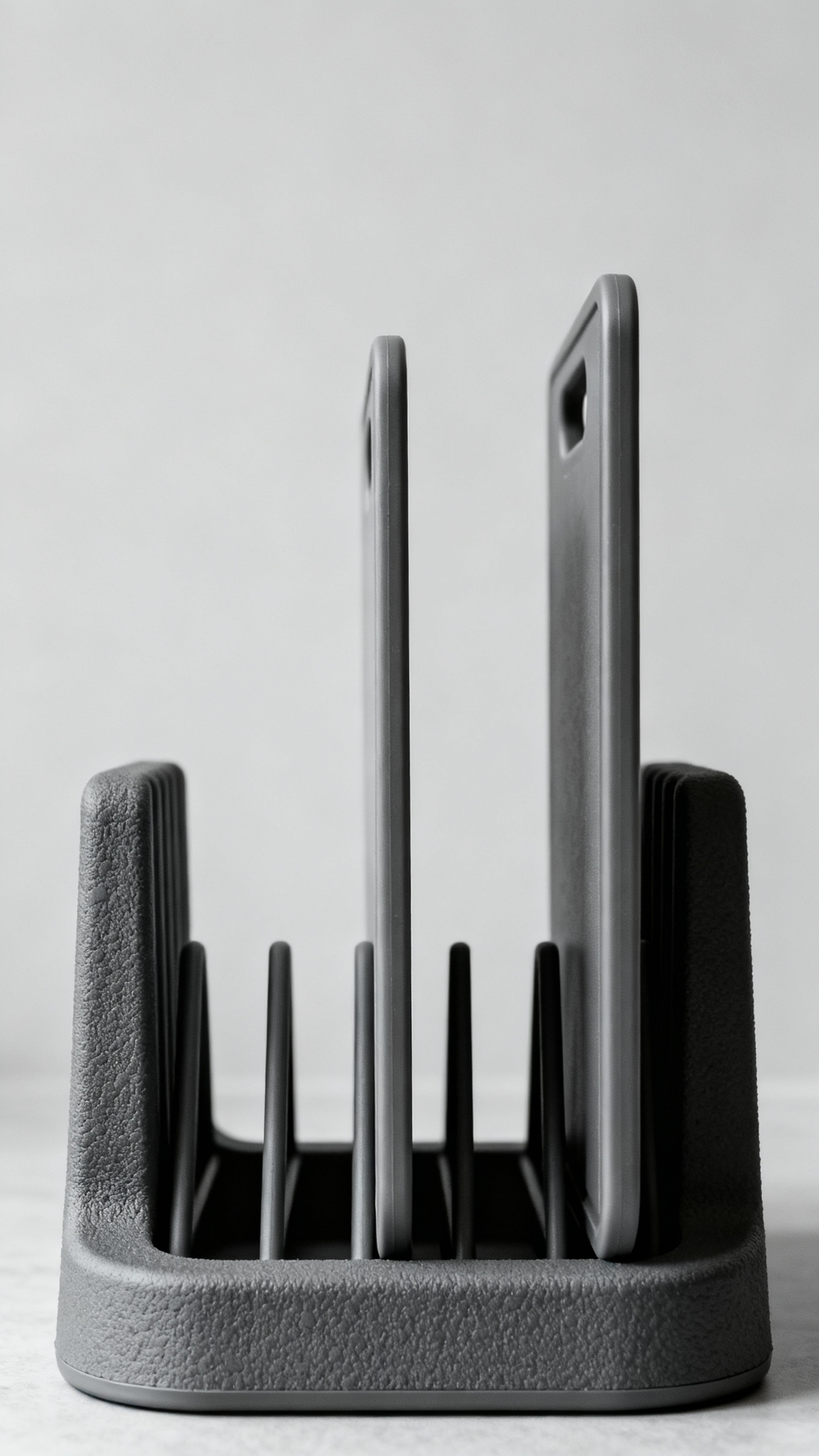
- Expandable Pan & Lid Rack – Adjustable dividers hold sheet pans, cutting boards, and lids upright. Look for a model with U-shaped, rubber-coated dividers so lids don’t clatter. Slide it into a base cabinet and watch chaos disappear.
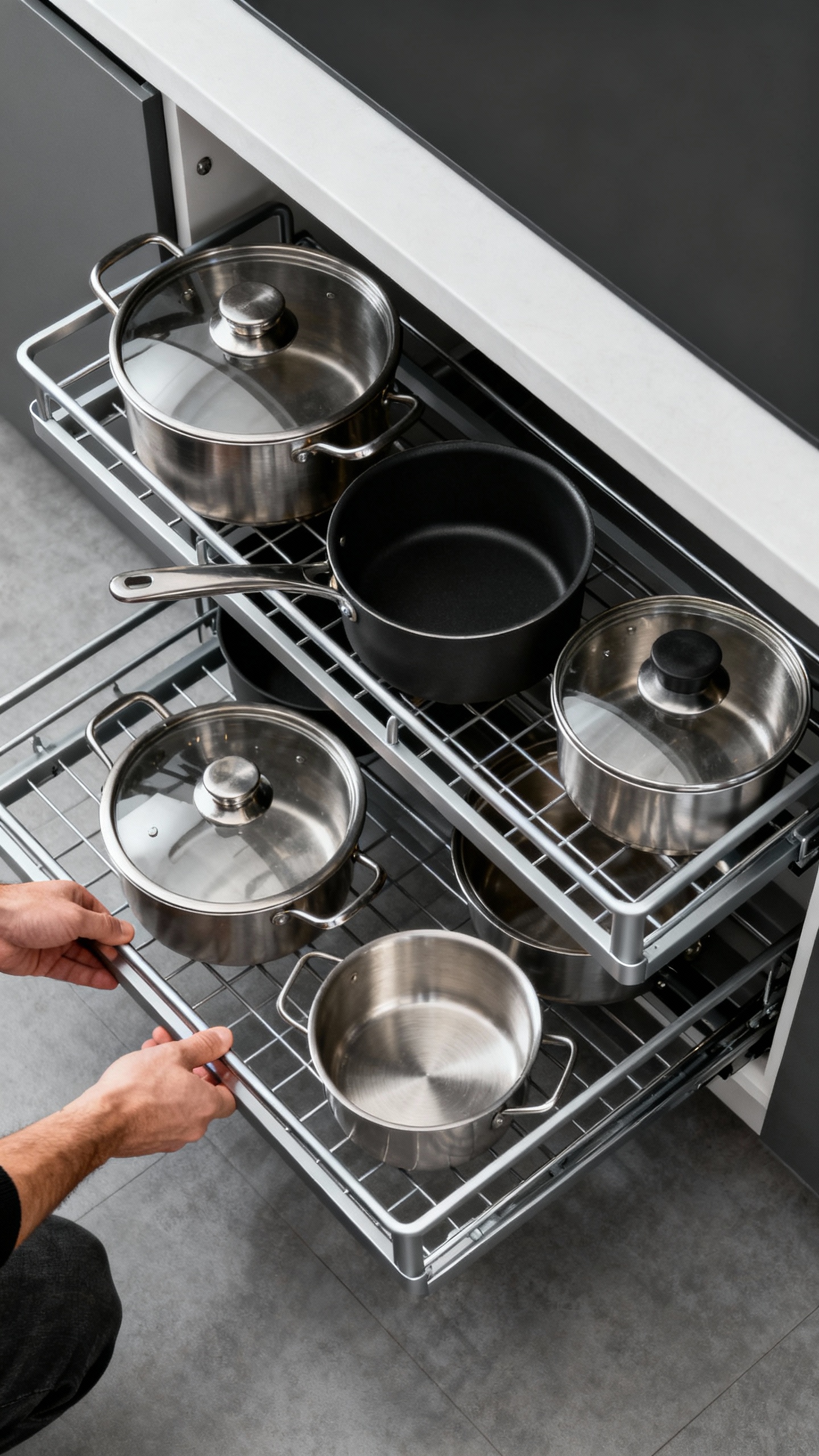
- Pull-Out Cabinet Organizer (2-Tier) – A slide-out metal basket system turns deep cabinets into drawers.Choose full-extension ball-bearing rails and a weight rating of 50+ lbs. It’s a game-changer for pots and small appliances.
- Under-Shelf Hanging Baskets – Installs in one second, no tools. Ideal for foil, wraps, and napkins.Make sure the lip fits your shelf thickness (usually up to 0.9 inches) and the basket is powder-coated steel so it won’t bend.
- Adjustable Spice Rack Drawer Inserts – Turn a shallow drawer into a spice index. Tiered inserts keep labels visible, and the angled tiers stop bottles from rolling. Get BPA-free plastic or bamboo that you can trim to size.
- Door-Mounted Lid Organizer – Use that wasted door space!A slim rack holds 4–6 lids. Look for foam bumpers to protect doors and offset mounting brackets so handles clear shelves.
- Stackable Can Racks – For soup hoarders or Costco lovers. A tiered, gravity-fed rack keeps labels facing forward.Look for adjustable lanes so it fits different can sizes and a stable, non-wobble frame.
- Pull-Down Upper Cabinet Shelf – If you’re short or your shelves are tall (or both), a pull-down unit brings top-shelf items within reach. Choose one with a soft, gas-assisted mechanism and a 30–40 lb limit.
- Food Storage Container Set with Stand-Up Lids Rack – BPA-free containers that stack neatly, plus a separate vertical rack for lids. Get uniform sizes that share lids and splurge on locking mechanisms that don’t warp in the dishwasher.
- Expandable Under-Sink Shelf – Works around plumbing like a puzzle.Adjustable width and removable slats mean you can dodge the P-trap and still gain two levels of storage. Get rust-resistant metal over all-plastic.
- Roll-Out Tray for Trash Bags & Foils – A shallow pull-out with dividers keeps wraps, bag boxes, and parchment grab-ready. Opt for full-extension rails and pre-drilled mounting plates for easy install.
How to Choose the Right Organizers (So You Don’t Return Everything)
Measure.
Then measure again. Depth, width, and door clearance matter more than the product’s vibe. IMO, here’s how to shop smart.
- Depth rules your life: Standard cabinets run 11–24 inches deep. Pull-outs need clearance for the rails, handle, and your stuff.
- Height matters: Stackable shelves help only if your shelf height is 11 inches or more.For cups, 8–10 inches works best with a riser.
- Door clearance: Door-mounted racks need 0.5–1 inch between the door and shelves. Check hinge type and protrusions.
- Weight ratings: Heavy cookware demands 50–100 lb rated systems. Don’t risk flimsy hardware; your toes will thank you.
- Material choices: Steel for durability, bamboo for aesthetics, clear plastic for visibility.FYI, acrylic looks great but scratches; PET holds up better.
Smart Zones: Organize by How You Cook
Forget “pan cabinet” and “junk drawer.” Organize by actions. You’ll move faster and put stuff back without thinking.
Prep Zone
- Cutting boards upright in an expandable rack near knives.
- Mixing bowls stacked with a shelf riser to free space.
- Measuring tools in a shallow pull-out or bin.
Cooking Zone
- Spices in a drawer near the stove on tiered inserts.
- Pans and lids in a 2-tier pull-out right below the cooktop.
- Oils and vinegars on a lazy Susan in the adjacent cabinet.
Storage Zone
- Containers and lids together (non-negotiable) with a vertical lid rack.
- Snacks in clear bins with labels so everyone stops asking where things go.
- Cans on a tiered rack so you don’t rebuy black beans for the fifth time.
Installation Tips You’ll Actually Use
- Template trick: Tape the mounting template to a scrap of cardboard, then use it as a drill guide inside the cabinet. Way easier than acrobatics.
- Pre-drill pilot holes: Prevents splitting and keeps screws square.Use painter’s tape on the bit as a depth stop.
- Shim for level: Cabinets are rarely perfect. A few playing cards or plastic shims under a slide rail can fix tilt.
- Protect the finish: Use felt pads under metal organizers to avoid scratches and rattles.
- Test fit fully loaded: Before final screws, load the organizer and open/close to check clearance. Saves cursing later.
Maintenance: Keep It Tidy Without Trying Hard
Systems that fight you won’t survive.
Set it up so lazy wins.
- Label the bins so everyone puts stuff back where it belongs. Even you, future-you.
- Do a 5-minute reset weekly—straighten lids, toss empties, wipe shelves with a damp cloth.
- Embrace “one in, one out” for gadgets and mugs. If it doesn’t fit the system, it doesn’t stay.Harsh but effective.
FAQs
What’s the best organizer for small kitchens with zero drawer space?
Go vertical and go door-mounted. Use under-shelf baskets for wraps, a door-mounted lid rack for lids, and a lazy Susan for condiments. Add a 2-tier pull-out in one base cabinet to store pans and pots without eating floor space.
Are pull-out organizers worth the price?
Yes, if you have deep cabinets.
They prevent dead zones and make heavy cookware accessible. Choose full-extension rails and a strong frame. Cheaper slide-outs flex and feel meh; spend a little more once and enjoy it daily.
How do I stop containers and lids from becoming chaos again?
Use a uniform container set with shared lids and store lids vertically in a rack.
Keep only what fits the rack. If a lid has no match, it doesn’t get to live here, IMO.
What should I do with awkward corner cabinets?
Install a large turntable for bottles or a kidney/half-moon pull-out if you want maximum access. If that’s pricey, two oversized lazy Susans stacked at different heights work surprisingly well.
Metal or bamboo—what lasts longer?
Powder-coated steel wins for durability and weight.
Bamboo looks warm and resists odor, but it needs a wipe-dry to avoid swelling. Mix them: metal for load-bearing items, bamboo for shelf risers and drawer inserts.
Can renters install these without damage?
Absolutely. Use freestanding racks, bins, lazy Susans, under-shelf baskets, and tension rods.
For door racks, pick adhesive or over-the-door models. When screws are required, stick to pre-existing holes or use tiny pilot holes you can fill later.
Conclusion
You don’t need custom cabinets to get a chef-level setup—you just need smarter tools. Start with shelf risers, a lid rack, and one pull-out, then add bins and turntables where you feel friction.
In a weekend, you can turn “Where’s the cumin?!” into “Found it.” Your future self will thank you every single time you open a cabinet, FYI.