
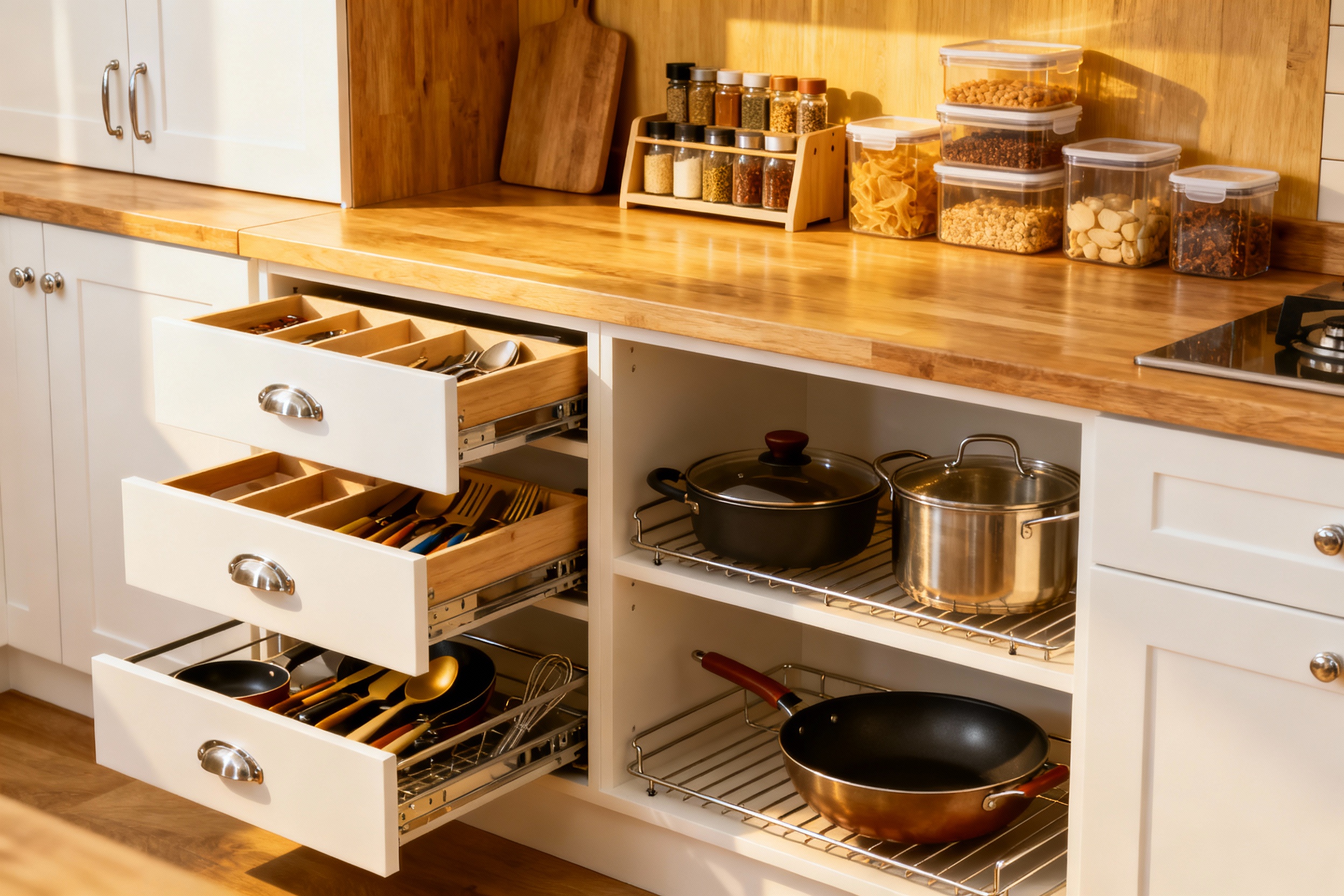
You open a cabinet and avalanche! Lids tumble, spice jars roll, and that one pan handle juts out like it’s plotting against you. Let’s fix it.
You can double your storage without installing a single new cabinet—just smarter use of what you’ve got. We’ll stack, hang, slide, and sort until everything has a place and nothing attacks you when you reach for cinnamon.
Start with a ruthless clear-out
Before you buy a single organizer, pull everything out. Yes, everything.
You’ll discover duplicates (three can openers, really?), expired spices, and gadgets you forgot existed.
- Set up zones: Keep, donate, toss, and relocate (hello, junk drawer refugees).
- Check dates: Spices over two years old? They’re basically colored dust.
- Measure your cabinets: Width, depth, and height—organizers only help if they actually fit.
Use vertical space like a pro
Cabinets are tall, and most of us only use the bottom half. Let’s fix that with simple add-ons.
- Shelf risers: Turn one shelf into two.Perfect for plates, bowls, and mugs.
- Stackable bins: Use clear bins for snacks, baking items, or coffee-station supplies.
- Under-shelf baskets: Slide one under a shelf to store foil, wraps, or small plates.
Plate, bowl, and mug stacking strategy
Stack heavy items low and often-used items front and center. Keep a single shelf for “daily drivers” (your favorite mug, everyday bowls). Everything else can sit higher or in the back, IMO.
Go full door-core: make your cabinet doors work
Your doors can handle more than you think.
Use them for flat or lightweight items so they don’t slam around.
- Adhesive hooks: Hang measuring spoons, oven mitts, bag clips.
- Shallow door racks: Store plastic wrap, parchment paper, spice packets.
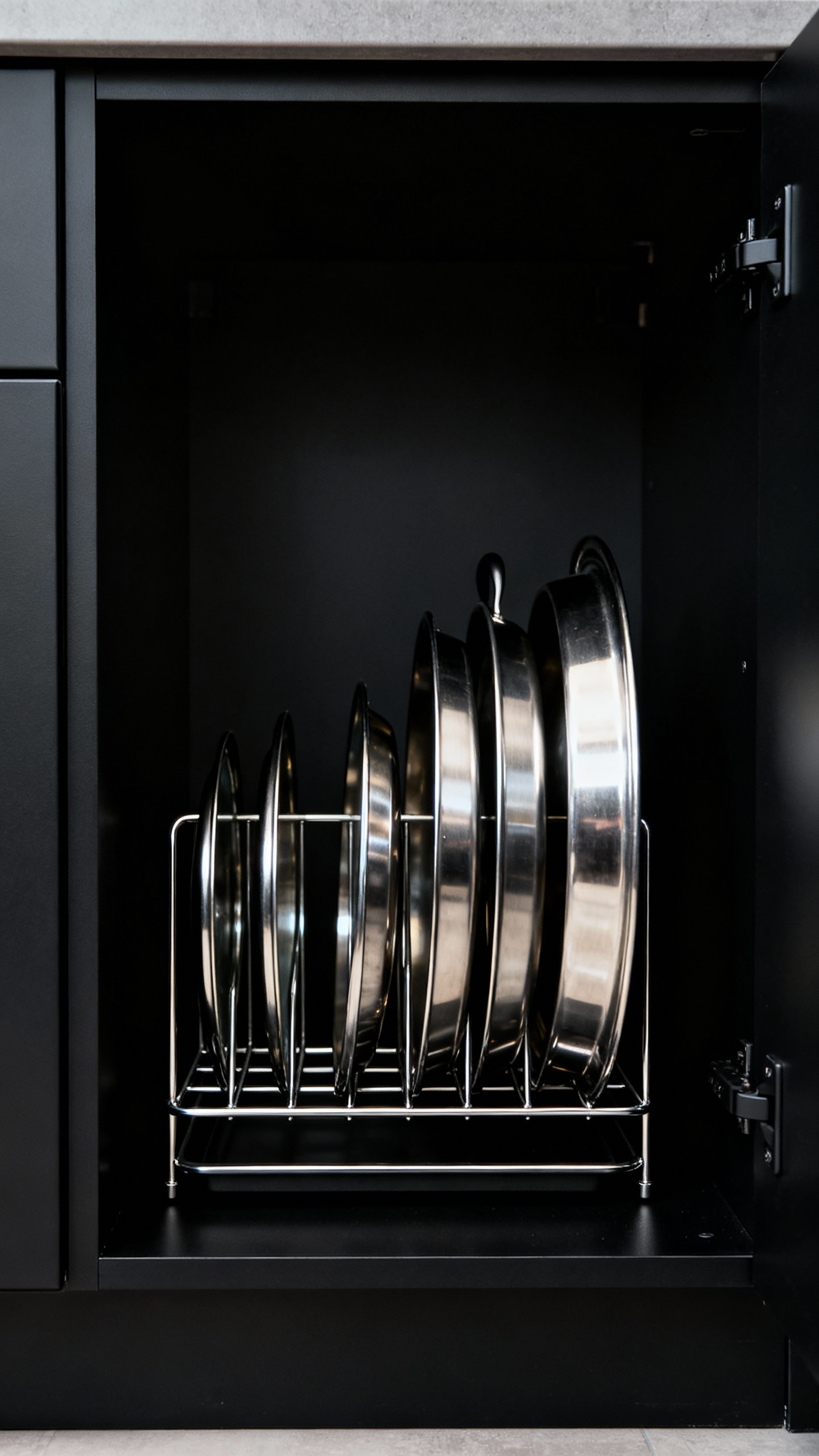
- Lid organizers: Mount a few bars or a slim rack to corral pot lids vertically.
Quick caution
Check door clearance so racks don’t crush your stuff. Also, avoid heavy items on doors—no one wants a door sagging like a tired eyelid.
Spices: from chaos to café-level organization
Spice jars multiply like rabbits. Corral them with structure and you’ll actually cook more, FYI.
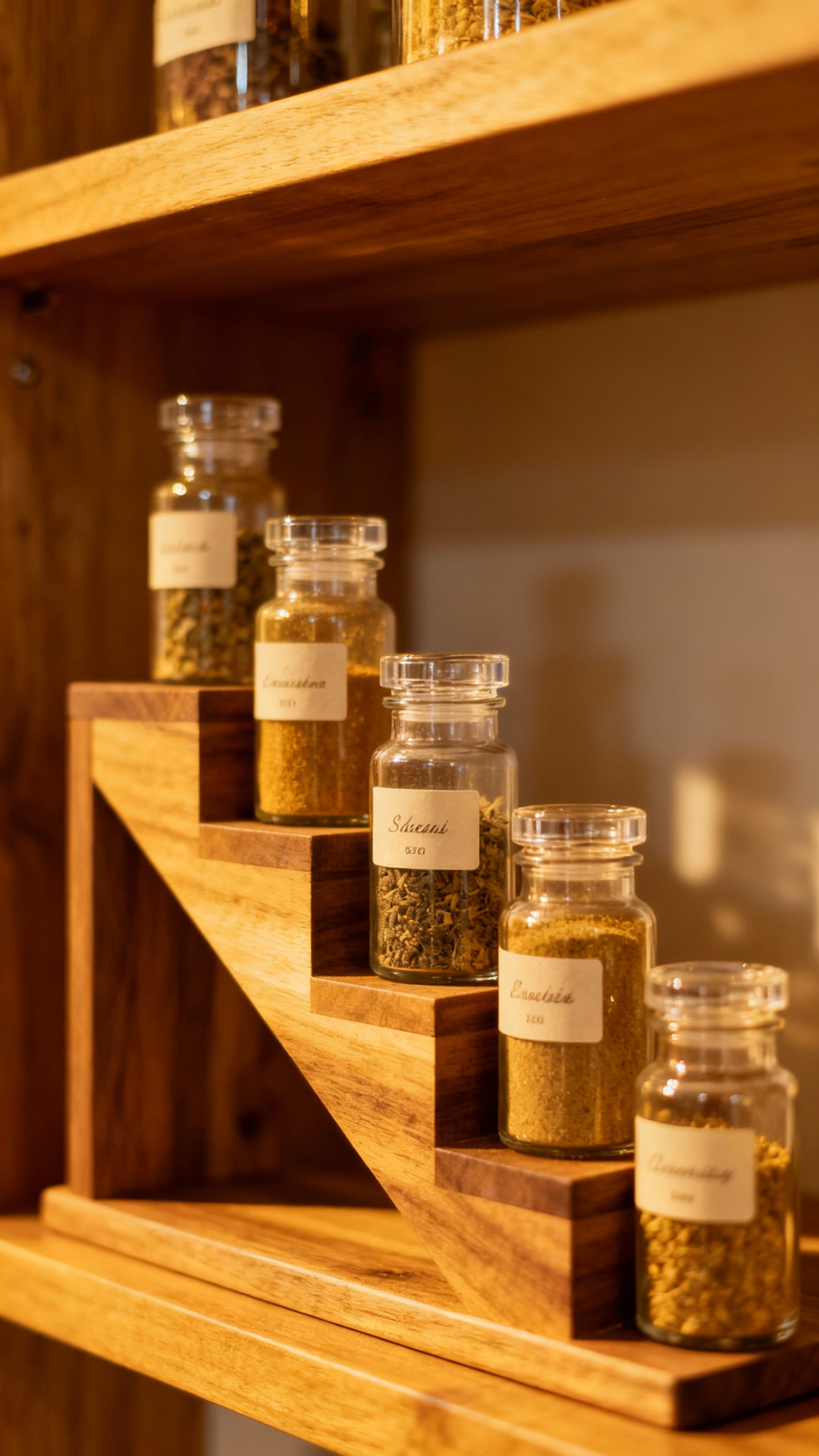
- Tiers or stair-step risers: See every label without playing spice Jenga.
- Drawer inserts: Lay spices flat in a shallow drawer with labels on the lids.Chef’s kiss.
- Magnetic strips: If you have a metal surface or inside-cabinet magnet racks, mount small tins.
Labeling that doesn’t annoy you
Use clear, consistent labels—print if you must, but a bold marker works. Add the date you opened it. You’ll thank yourself when “mystery chili powder” tastes like dust.
Pantry zones inside regular cabinets
No pantry?
No problem. Create mini-zones in your cabinets so everything lands where it belongs.
- Baking zone: Flour, sugar, cocoa, baking soda, measuring tools in one area.
- Breakfast zone: Oats, nut butters, syrup, tea, coffee—keep it morning-friendly.
- Snack zone: Bins for sweet, salty, and “school lunch” so grab-and-go stays easy.
Bin and basket best practices
Go clear so you can see contents. Use handled bins for easy pull-out.
Label the shelf edge or the bin front. Limit categories to what you actually buy—if you don’t bake, skip the baking shrine.
Drawers that earn their keep
Drawers hide a lot of potential. Divide them like you mean it.
- Expandable dividers: Separate spatulas, tongs, whisks, and the inevitable corn-cob holders.
- Knife docks: Use an in-drawer knife block if you hate countertop knife blocks.
- Utensil caddies: Deep drawers love upright caddies for ladles and giant spoons.
The chaotic lid situation, solved
Store pots and pans stacked by size; keep lids vertical in a rack or file organizer.
If you own more lids than pots, you’ve found the real problem.
Under-sink Tetris without the swamp vibes
Pipes and a trash can make this space tricky, but you can still win.
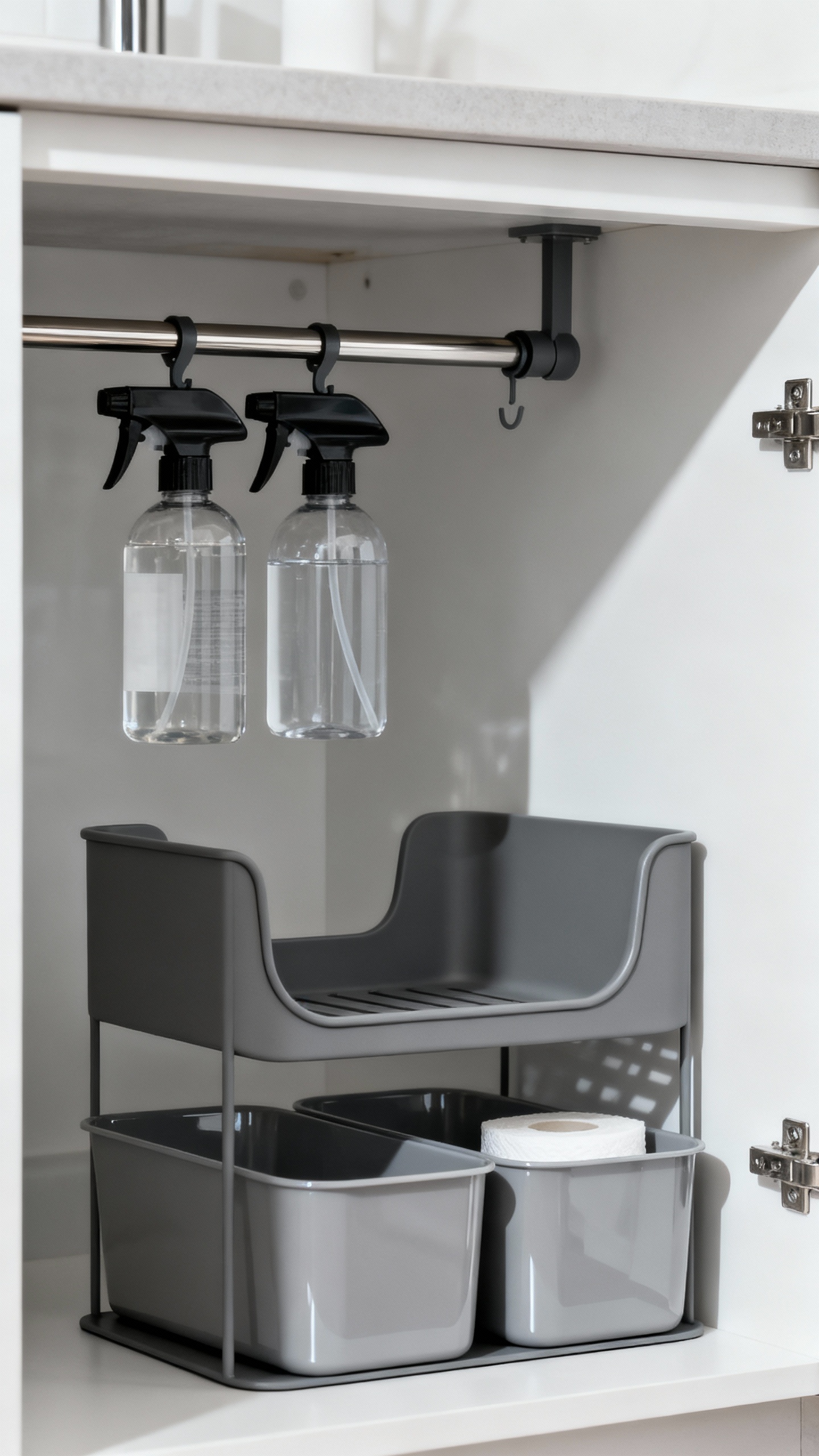
- U-shaped under-sink shelves: They work around plumbing and add a second tier.
- Slide-out caddies: House cleaning sprays, sponges, and dishwasher tabs together.
- Tension rod: Hang spray bottles by their triggers to free up the base.
Leak insurance
Line the base with a waterproof mat and store everything in wipeable bins. If something leaks, you won’t sacrifice the entire cabinet to the cleanup gods.
Corner cabinets: the final boss
Corners swallow things. Add hardware that lets you see and reach.
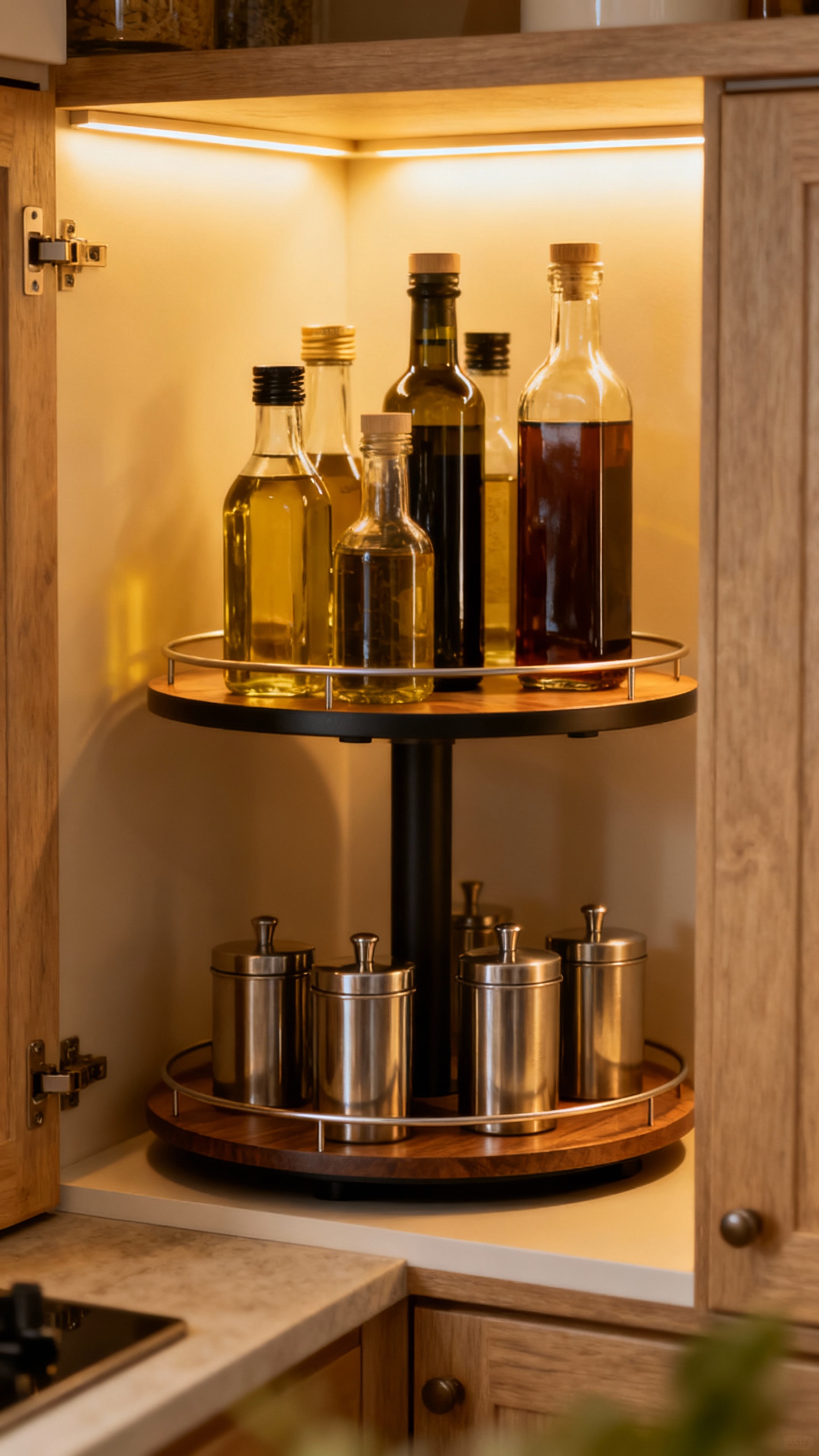
- Lazy Susans: Two-tier turntables are perfect for oils, vinegars, or baking supplies.
- Pull-out trays: Full-extension trays let you reach the very back without yoga.
- Blind-corner pull systems: Splurge item, but the satisfaction?Off the charts.
What belongs in corners
Bulkier, less-used items—Dutch ovens, stockpots, small appliances. Keep daily stuff up front elsewhere.
Containers: matchy-matchy where it counts
Uniform containers make better use of space and look ridiculously tidy.
- Square or rectangular canisters: They stack better than round. Use for flour, rice, pasta.
- Airtight seals: Keeps food fresh and deter pantry moths (the drama queens of pests).
- Size strategy: Pick 2-3 container sizes and stick to them so everything nests nicely.
Decanting: worth it?
Decant staples you buy often (rice, oats, flour).
Skip decanting one-off items. IMO, only decant what you’ll refill—otherwise it’s cosplay for your dry goods.
Maintenance: 10-minute resets that actually happen
Systems die when no one maintains them. Keep it painless.
- Weekly 10-minute tidy: Put strays back in their zones.
- One-in, one-out rule: If a new gadget comes in, an old one retires.
- Quarterly purge: Check spices, snacks, and weird sauces with labels in languages you don’t read.
FAQ
How do I organize a tiny kitchen with almost no cabinets?
Prioritize vertical solutions: wall-mounted rails for utensils, magnetic knife strips, and floating shelves.
Add a freestanding cart for overflow and use over-the-door racks on any available door. Then turn each cabinet into a zone with risers and bins so nothing floats aimlessly.
What’s the best way to store pots and pans in a cabinet?
Nest pots by size and use a file-style rack for lids so they stand upright. If space allows, add a pull-out tray for heavy cookware to save your back.
Keep your most-used skillet front and center—don’t bury it like treasure.
Are lazy Susans worth it for cabinets?
Absolutely, especially for corners and upper cabinets. They turn dead space into accessible space and prevent “back-of-the-cabinet amnesia.” Use them for oils, sauces, and baking essentials.
How can I keep Tupperware from exploding everywhere?
File lids vertically in a shallow bin by size, and stack containers by shape. Dedicate one cabinet or drawer to the whole system so strays don’t wander.
If a container doesn’t have a matching lid, it doesn’t live here—harsh but necessary.
What should I put on the highest shelves?
Store lightweight, rarely used items: holiday platters, extra paper goods, specialty appliances. Avoid heavy glass or cast iron up high for safety. Use labeled bins so you can pull down one thing instead of playing avalanche roulette.
Do I need to label everything?
Not everything, but label bins, canisters, and spices for sanity.
Labels create accountability and make it easier for other people to put stuff back where it belongs. Future you appreciates it—promise.
Conclusion
You don’t need new cabinets—you need smarter cabinets. Stack shelves, use doors, file lids, turn corners into MVPs, and label just enough to keep chaos in check.
Give yourself a weekly 10-minute reset and your kitchen will stay functional, friendly, and blissfully avalanche-free. Now go open a cabinet without flinching.