
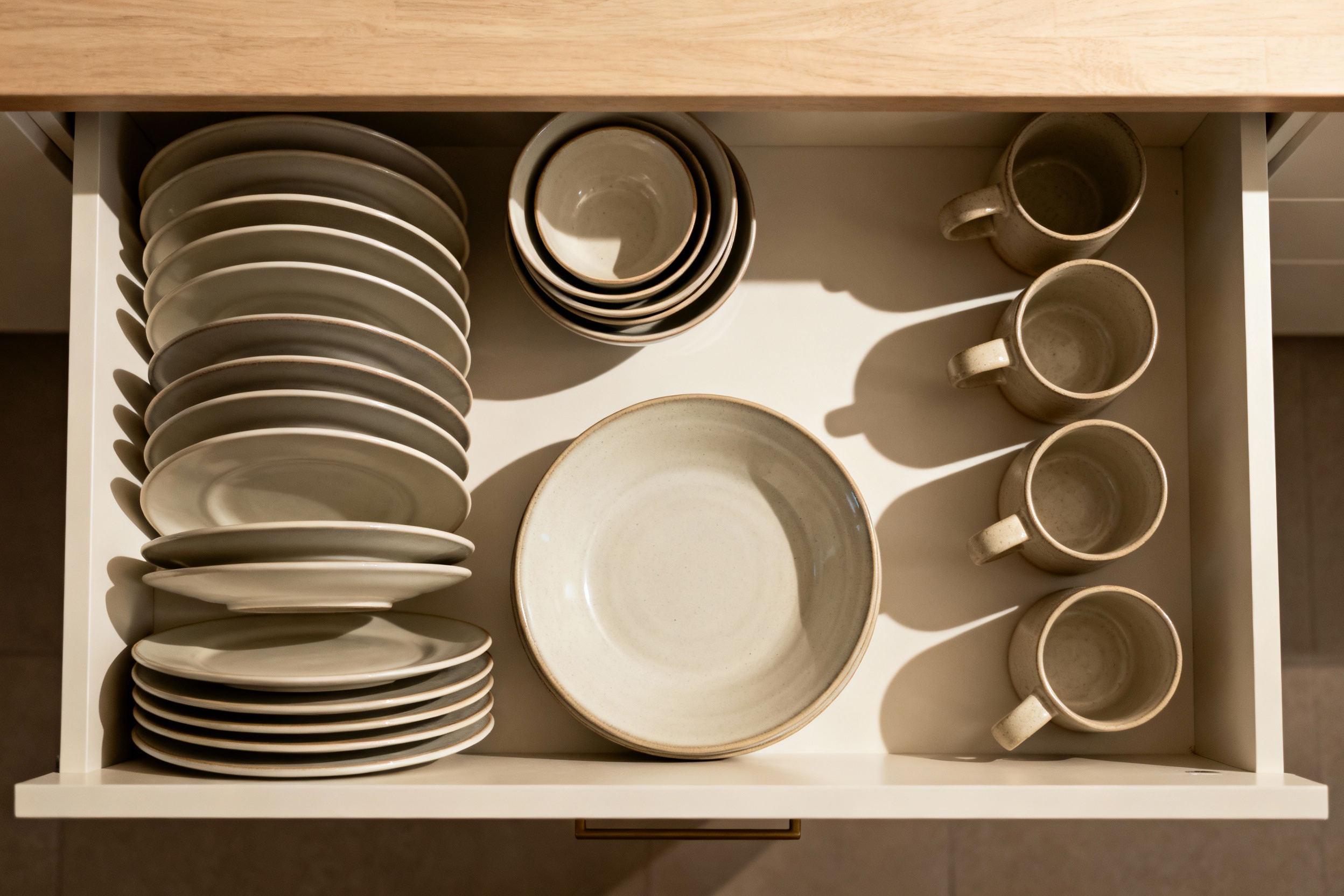
You stack plates like a Jenga tower and hope for the best, right? Let’s fix that. Smart plate storage can save space, protect your dishes, and make your kitchen feel like it knows what it’s doing.
The best part? You don’t need a remodel—just a few tweaks and a little strategy.
Start With a Reality Check: What Do You Actually Use?
Before you buy organizers, take five minutes to audit your plates. Do you use all 12 dinner plates, or just the top three like a creature of habit?
Keep daily dishes front and center and tuck the “special occasion” set somewhere less accessible.
- Daily stack: Dinner plates, salad plates, and bowls you grab every day
- Occasional stack: Platters, serving bowls, and fancy porcelain
- Seasonal/rare: Holiday sets, heirlooms, and anything you’re scared to chip
This quick sort helps you pick the right storage strategy and gives you instant clarity. FYI, donating orphan plates you never use counts as organization too.
Shelf Strategies That Don’t Drive You Nuts
Cabinets can work beautifully when you stop treating them like plate graveyards. The trick?
Vertical access and stable stacks.
Use Shelf Risers for Double Decking
Shelf risers create a second level so you can separate dinner plates from salad plates without playing Tetris. You’ll grab what you need without unstacking everything.
Plate Holders = No More Wobble
Wire or bamboo plate racks hold plates upright. They’re clutch for small cabinets and shallow shelves.
Plus, they stop sliding and make the whole setup look like you planned it.
Add Non-Slip Liners
Line shelves with non-slip mats so stacks don’t drift. Especially helpful for glass or glossy plates that love to slide.
Go Vertical: Plate Racks, Dividers, and Dowels
If you hate stacking, store plates on their sides like records. It protects delicate edges and makes every plate accessible without lift-and-hope.
- Adjustable dividers: Great for deep cabinets or shelves.Slot in your plates by size.
- DIY dowel boards: If you’re handy, add dowels to a board to create custom “parking spots” for plates.
- Plate stands: For display-worthy pieces, stands keep them safe and easy to grab.
IMO, vertical storage wins if you own heavy or fragile plates. No more bicep curls every time you want pasta.
Drawers Are the Secret Weapon
Deep drawers beat upper cabinets for heavy plates. You look down, see everything, and pull without lifting high.
Your back will send you a thank-you note.
Peg Systems Keep Stacks Stable
Install an adjustable pegboard in a drawer. Move pegs to fit different plate sizes and keep stacks from sliding when the drawer opens. It feels fancy, but it’s easy to set up.
Dedicated Zones for Breakfast vs.
Dinner
Use one drawer for breakfast plates and bowls, another for dinner plates. You’ll find stuff faster, especially when caffeine levels run low.
Max Out Awkward Spaces
Most kitchens hide incredible plate storage in weird corners and cabinets you ignore. Time to recruit them.
- Corner cabinets: Add a lazy Susan or a full-circle turntable for bowls and small plates.
- Over-fridge cabinet: Stash platters and rarely used sets in labeled bins.
- Under-sink side: Not for plates, but move cleaning products here so you free up prime space elsewhere.
Back-of-Door Storage
Mount slim racks on pantry or cabinet doors for small plates and cutting boards.
Check clearance so the door still closes without scraping your patience.
Open Shelves Without the Chaos
Open shelving can look chic or messy. The difference? Editing and consistency.
- Match sets by color or material: Stack whites together, stoneware together, etc.
- Limit stacks to two: More than two stacks per shelf reads cluttered, not curated.
- Use a tray: A low tray under bowls or side plates groups items and makes dusting easier.
Display vs.
Everyday
Put your prettiest plates front-facing on stands, and keep workhorse plates stacked behind or on the next shelf. You get style without sacrificing function.
Protect Fragile and Heirloom Pieces
Some plates cost more than your car insurance. Treat them right.
- Plate separators: Use felt or silicone discs between fine china to prevent scratches.
- Climate control, sort of: Avoid storing delicate pieces above the stove or dishwasher, where heat and steam live.
- Dedicated bins: Store seasonal sets in padded bins with labels.No guessing games.
Label Like You Mean It
Add labels inside cabinets and on bins—“Salad Plates,” “Dessert Plates,” “Holiday China.” Sounds extra, but it keeps everyone in the house from wrecking your system. Especially helpful if you share a kitchen with tiny chaos agents or well-meaning guests.
Small Kitchen Hacks That Actually Work
Tight on space? You still have options that don’t require a new kitchen or a new lease.
- Magnetic/adhesive hooks: Hang lightweight plate racks under shelves for side plates.
- Under-cabinet shelves: Add slim shelves that clip under existing cabinets for shallow stacks.
- Rolling cart: Use a bar cart as a dish station.Top shelf for plates, middle for bowls, bottom for napkins and cutlery.
- Stack smarter: Alternate big plate-small plate-big plate to reduce wobble, or use separators in between.
When All Else Fails: Edit
One in, one out. If a new set moves in, retire the chipped stuff or the “I swear I’ll use this someday” plates. You won’t, and that’s okay.
Maintenance: Keep the System Alive
You organized once—amazing.
Now keep it together with simple habits.
- Return plates to their actual home. Radical, I know.
- Do a 5-minute shelf reset weekly—wipe crumbs, re-stack, ditch random plastic lids.
- Revisit twice a year. Seasonal swap, wipe down, donate strays.
Pro tip: If your system starts slipping, you likely made access too hard.
Move everyday plates closer and reduce the steps.
FAQs
How should I store heavy stoneware plates?
Use a deep drawer with a peg system or dividers. You’ll avoid overhead lifting and protect edges. If drawers aren’t an option, store them on the lowest shelf with non-slip liners and a short stack height.
What’s the best way to store plates in a tiny kitchen?
Go vertical and mobile.
Use plate racks, add shelf risers, and consider a rolling cart for daily dishes. Keep only one full set accessible and stash extras in labeled bins elsewhere (hall closet counts, IMO).
Do plate separators really matter?
Yes, especially for fine china or glossy finishes. Felt or silicone discs stop micro-scratches from stacking friction.
They’re cheap insurance for pieces you care about.
Can I mix open shelving and closed cabinets?
Totally. Put frequently used, sturdy dishes on open shelves and delicate or mismatched sets behind doors. Keep a consistent color story on open shelves so it looks intentional, not chaotic.
How many plates do I actually need?
For most households: 4–8 dinner plates, 4–8 salad/app plates, and the same number of bowls.
Entertain often? Add a second set that stacks tightly. Anything beyond that should earn its keep.
Are vertical plate racks safe for delicate dishes?
Yes, if you use padded dividers and don’t jam them in.
Make sure the rack fits your plate diameter and allows a little wiggle room. Add felt bumpers where plates touch metal.
Wrap-Up: Make Your Plates Work For You
A good plate setup saves time, protects your dishes, and makes your kitchen way less annoying. Prioritize what you use, go vertical where you can, and lean on drawers and dividers for heavy stacks.
Edit ruthlessly, label shamelessly, and keep it flexible. FYI: organized plates make cooking feel easier—because you won’t start dinner with a cabinet avalanche. IMO, that’s a win.