
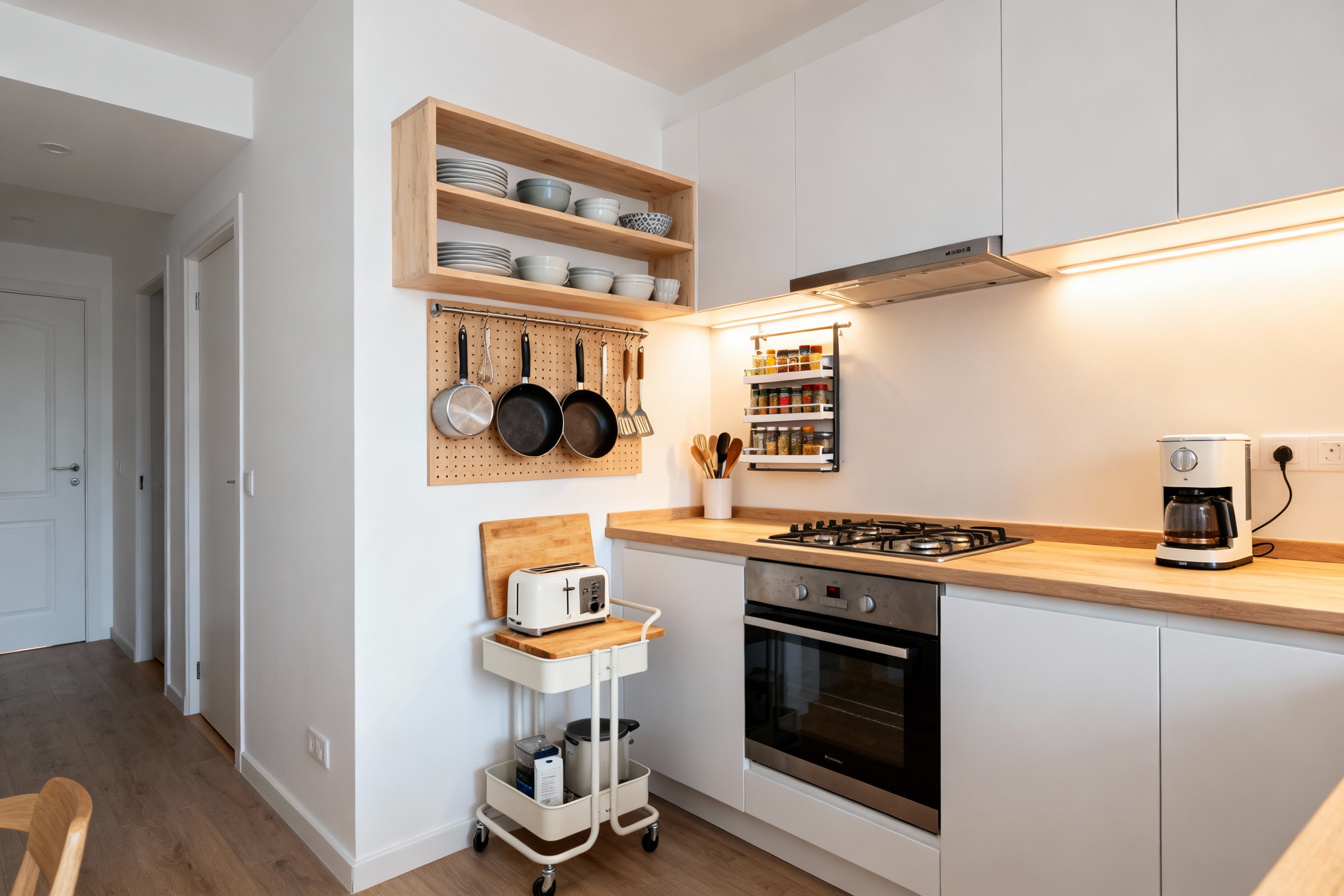
Small kitchens can feel like a game of culinary Tetris. You want space for prep, appliances, snacks, and that one fancy pan you never use—but where does it all go? Good news: you don’t need more square footage; you need smarter systems.
Let’s turn your tiny kitchen into a little powerhouse that actually works for you.
Start With a Ruthless Edit
You can’t organize clutter. Pull everything out and ask the hard questions: Do I use it weekly? Does it do more than one thing?
Would I buy it again today? If not, let it go.
- Keep multitaskers: chef’s knife, cutting board, cast-iron, immersion blender.
- Say goodbye to duplicates: three spatulas, mismatched containers, chipped mugs.
- Limit “just in case” items: if you haven’t used it in 6 months, you won’t.
Set a Container Limit
Pick one bin for food storage containers. If it overflows, something gets donated.
This constraint keeps chaos in check, IMO.
Make Your Walls and Doors Work Overtime
Your walls hold secret storage gold. Mount shelves, rails, and magnetic strips to free up drawers and counters.
- Magnetic knife strip near the prep zone—safer and sleeker than a block.
- Rail with S-hooks for ladles, measuring cups, and mitts.
- Shallow shelves for spices and oils—keep only what you actually cook with.
- Over-the-door racks on pantry or cabinet doors for foil, wraps, and snacks.
Use the Back of Cabinet Doors
Stick-on hooks or slim racks hold pot lids, cutting boards, or cleaning spray. FYI, lids are the Tupperware of chaos—contain them and you win half the battle.
Create Zones (Even If You Have Two Square Feet)
You don’t need a giant kitchen to think like a pro.
Assign zones so everything has a home and cooking feels less like a scavenger hunt.
- Prep zone: knife, board, mixing bowls, towels.
- Cooking zone: pots, pans, oils, salt, spatula.
- Beverage zone: coffee/tea gear, mugs, kettle, sweeteners.
- Snack/grab zone: nuts, bars, fruit—top shelf or basket for quick access.
Micro-Zones Inside Drawers
Use drawer dividers, small bins, and even repurposed boxes to keep measuring spoons away from rubber bands and soy sauce packets. It’s the little wins.
Max Out Cabinets and Drawers (Without a Remodel)
Cabinets hide space you can unlock with the right organizers.
- Shelf risers double vertical space for plates and bowls.
- Pull-out baskets transform black-hole lower cabinets.
- Pan and lid racks keep everything upright and grabbable.
- Lazy Susans in corners for sauces and baking supplies.
- Under-shelf baskets for wraps, cutting boards, or small plates.
Nest and Stack Like a Champ
Nest mixing bowls. Stack pans with felt protectors.
Buy square, stackable food containers with one lid size. Mismatched lids are a life tax you don’t need to pay.
Counter Space: Guard It Like Treasure
Counter real estate equals sanity. Only essentials get a spot.
- Mount what you can: paper towel, knives, spice rack.
- Choose one small appliance that earns daily use (coffee machine? toaster oven?) and store the rest.
- Use trays to corral oils, salt, and pepper—easy to clean and looks intentional.
- Foldable dish rack lives under the sink when not in use.
Sink and Stove Add-Ons
– Over-the-sink cutting board adds instant prep space. – Roll-up drying rack doubles as a cooling rack. – Stove burner covers or a noodle board give you temporary extra counter space when you’re not cooking.
Pantry Solutions (Even Without a Pantry)
No pantry?
No problem. Build one with compact organizers.
- Clear bins with labels for snacks, baking, breakfast, and pasta/rice.
- Tiered can risers so you see everything—no surprise beans from 2014.
- Over-the-fridge baskets for chips and backups (the snack throne).
- Rolling cart between fridge and wall for oils, cans, and spices.
Decant Strategically
Decant only the stuff you buy often and in bulk: rice, oats, flour, sugar. It looks good and prevents overbuying.
Skip decanting 47 specialty flours unless you actually bake that much (you don’t, IMO).
Appliance and Gadget Triage
Appliances eat space fast. Keep the multipurpose MVPs and rehome the one-trick ponies.
- Immersion blender replaces a blender for soups and small smoothies.
- Toaster oven or air fryer can replace a toaster plus some oven jobs.
- Instant Pot-type cooker handles rice, pressure cooking, slow cooking, and yogurt.
Go Mini or Foldable
Compact electric kettles, collapsible strainers, nesting measuring cups, and fold-flat colanders save serious space. Bonus: they’re cute and make you feel like a tiny-home wizard.
Use Vertical and “Dead” Spaces
Look for inches you can steal back.
- Above cabinets: stash party platters, slow cooker, or extra paper towels in labeled bins.
- Toe-kick drawers (if you can add them) for sheet pans and lids.
- Side of the fridge: magnetic shelves for spices, foil, and oven mitts.
- Ceiling pot rack if your lease allows—instant vibe and storage.
Furniture That Pulls Double Duty
– Slim console or bar cart = pantry-on-wheels. – Drop-leaf table = prep space now, dining later. – Storage bench = seating plus hidden appliance graveyard.
Smart Habits That Keep It Tidy
Systems beat willpower.
Build tiny habits that prevent clutter creep.
- One-in, one-out rule for mugs, gadgets, and containers.
- Sunday 10-minute reset: clear counters, wipe shelves, toss expired stuff.
- Label everything so roommates/partners put things back correctly (in theory).
- Prep bins in the fridge: produce, protein, leftovers—easy to grab, easy to see.
Batch Keep-It-Simple Meal Prep
Chop onions, wash greens, and cook a grain once. Store in stackable containers, top shelf. You’ll cook more, waste less, and avoid ordering takeout at 9:30 PM (no promises, but still).
FAQs
How do I organize a small kitchen on a tight budget?
Repurpose before you buy.
Use shoe boxes as drawer dividers, mason jars for dry goods, and tension rods under the sink to hang spray bottles. Hit thrift stores for lazy Susans and baskets. Spend where it matters: a magnetic knife strip, a few shelf risers, and clear bins.
Those stretch your space the most.
What should I keep on my counter?
Only daily-use items: coffee setup, cutting board, and maybe a toaster oven if you use it constantly. Everything else gets a cabinet, shelf, or bin. If you can pick it up with one hand, put it on a tray so it looks neat and cleans easily.
How can I store pots and pans without a lot of cabinet space?
Use a vertical rack for pans and a lid organizer mounted to a cabinet door.
Hang the frying pan you use daily on a rail or hook. If you have tall cabinets, add a second shelf or riser to stack without wobble. Consider one high-quality multipurpose pan to replace several.
Any tips for organizing a fridge in a tiny kitchen?
Group by function: dairy, condiments, produce, leftovers.
Use clear bins and label them. Keep quick-to-spoil foods at eye level so you actually eat them. Store herbs in a jar with water, and put baking soda in the back for smells.
No open bags—transfer into containers or clip them tight.
How do I handle spices in a small space?
Mount a slim rack or use a magnetic system on the fridge side. Keep only your core 12–15 spices and store extras in a backstock bin. Refill from bulk when needed.
Alphabetize if that sparks joy—or group by cuisine if that makes more sense for how you cook.
What’s the best lighting for tiny kitchens?
Under-cabinet LED strips change everything. They’re cheap, bright, and make prep safer. Add a warm bulb over the sink and a brighter one over the stove.
Good lighting makes your kitchen feel bigger and cleaner, which is half the battle.
Conclusion
Tiny kitchens don’t need more space—they need smarter choices. Edit ruthlessly, go vertical, protect your counters, and build zones that match how you live. Add a few hard-working organizers and habits, and suddenly your cooking life feels easy, breezy, and way less “where’s the lid for this container?” FYI: the best system is the one you’ll actually use, so start small and tweak as you go.